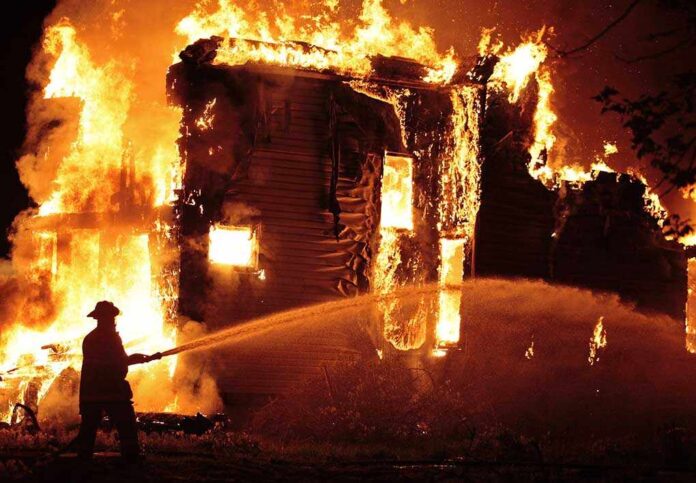
A devastating fire at a Pakistani shopping mall has claimed at least 26 lives, highlighting the deadly consequences of lax building safety standards and overcrowded commercial facilities that prioritize profits over human safety.
Story Overview
- Death toll continues climbing as rescue teams recover more bodies from Karachi’s Gul Plaza fire
- Over 1,200 shops crammed into facility designed for far fewer, creating fire hazard conditions
- Electrical short circuit likely triggered blaze that spread rapidly through combustible materials
- Government offers modest compensation while fundamental safety failures remain unaddressed
Overcrowding Created Death Trap
Gul Plaza housed over 1,200 shops, significantly exceeding its original design capacity and creating dangerous overcrowding. The multi-story mall on MA Jinnah Road stored highly combustible materials including cosmetics, garments, and plastic goods throughout its cramped interior. This reckless prioritization of commercial space over safety protocols transformed what should have been a manageable incident into a catastrophic loss of life that continues claiming victims days later.
Rescue Operations Reveal Mounting Casualties
The death toll has steadily climbed from initial reports of 11 fatalities to at least 26 confirmed deaths, with 60-74 people still missing and feared trapped in the debris. Firefighters from the Karachi Metropolitan Corporation and Rescue 1122 deployed approximately 40 fire tenders and battled the blaze for over 36 hours before bringing it under control. Multiple building sections collapsed during firefighting operations, complicating rescue efforts and likely contributing to the rising casualty count as teams continue searching the wreckage.
Government Response Falls Short
Sindh Provincial Chief Minister Murad Ali Shah announced compensation of 10 million rupees ($36,000) per deceased family member, a modest sum that fails to address the systemic failures enabling this tragedy. The preliminary assessment points to an electrical short circuit as the likely cause, highlighting infrastructure deficiencies in aging commercial buildings. Rather than offering token payments after preventable deaths, authorities should focus on enforcing building codes and electrical safety standards that could prevent future disasters.
The incident exposes critical vulnerabilities in Pakistan’s commercial infrastructure, where profit motives routinely override basic safety considerations. Dr. Abid Jalal Sheikh, the city’s chief rescue officer, confirmed that the rapid fire spread through shops storing combustible materials created conditions that intensified the disaster and complicated both firefighting and rescue operations, demonstrating how poor planning multiplies emergency response challenges.
Sources:
Death toll in Karachi mall fire jumps to 11
2026 Gul Plaza Shopping Mall fire
Death toll in Karachi mall fire keeps rising
Death toll in Karachi shopping plaza fire rises to 10
Karachi mall fire death toll rises to 23 as rescue