

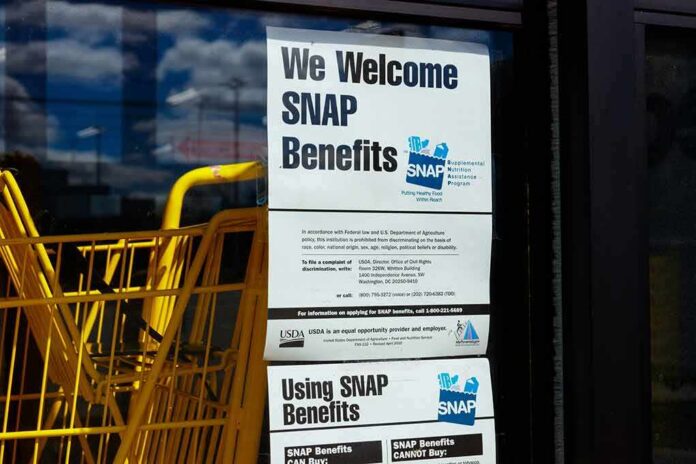
SNAP enrollment is falling as new federal rules expand work requirements and narrow exemptions for adults up to age 64, reshaping who gets food aid and why.
Story Highlights
- Federal guidance confirms broader SNAP time limits now cover adults ages 18–64.
- Covered adults must meet 20 hours per week of work or program activity or face a three-month limit.
- USDA documents say several exemptions were removed or narrowed, including for veterans and people experiencing homelessness.
- Maine rules add state-level steps, like maintaining a Maine JobLink account, that can affect participation.
What Changed In Federal SNAP Rules
United States Department of Agriculture guidance shows Congress expanded the time-limited work rule to adults ages 18 through 64. That change took effect under the One Big Beautiful Bill Act. The agency explains that these adults must meet work or qualifying program activity each month to keep getting aid beyond three months in a 36-month window. Federal notices also detail which groups are now covered and how the rule interacts with other general work rules.
Federal Food and Nutrition Service materials state the standard is at least 20 hours per week, averaged to 80 hours per month. Adults who do not meet it can only get three months of benefits in a three-year period, unless they qualify for an exemption. The agency distinguishes these time limits from general work rules that apply to many adults, which include registering for work and not quitting a job without good cause.
Who Lost Or Kept Exemptions
Implementation guidance says several prior exemptions were removed or narrowed. The documents list veterans, people experiencing homelessness, and young adults who aged out of foster care among groups that lost automatic exceptions. Parents now qualify for an exemption only if they care for a child under 14, which is a narrower standard than before. These shifts increase how many people must meet the monthly work or activity hours to remain eligible.
Researchers and lawmakers cite these changes to explain why enrollment is dropping. Some reports claim millions have left the program since mid-2025. Those figures are debated, and official guidance does not include a verified national headcount. Still, the logic path is clear: when more adults face time limits and fewer are exempt, participation can fall even if need does not. Federal documents confirm the scope of new coverage and exemptions.
How Maine Is Applying The Rules
Maine’s Department of Health and Human Services outlines its work-related rules. The state requires many applicants to register for work, respond to job referrals, and not cut hours below 30 per week without good cause. People working at least 30 hours per week or earning the same amount are exempt from the general work requirement. These rules sit alongside the federal time limit, which now reaches more Mainers ages 18–64 unless they qualify for a different exemption.
Maine’s administrative rule adds a concrete step: certain household members ages 16–59 must create and maintain a Maine JobLink account. The rule also describes workfare and sets caps on monthly hours. These state processes create more points where a missed notice, a login problem, or a late response can lead to a case closing. The available materials do not quantify how many closures come from these administrative hurdles versus true ineligibility.
Why This Matters Across The Aisle
Supporters say the rules aim to move more able adults toward work and to focus aid on the most vulnerable. Critics say the changes push people off food help while groceries still cost more, and that many who lose aid are not finding higher wages. The federal documents back one core fact: more people now face a time clock tied to work hours. Whether that means less waste or more hunger depends on outcomes data the public has not yet seen.
What We Still Do Not Know
Official guidance explains who is subject to the rule and how states must enforce it, but it does not provide verified counts of how many people left SNAP, by age or reason. It does not show how many found jobs with stable hours, or how many cycled off due to missed paperwork and later returned. Without those results, leaders on both sides can claim success or harm. Caseload decline is real; the cause and impact remain contested.
Bottom Line For Families
Households with adults ages 18–64 should check if a time limit now applies. People who can work need to average 20 hours weekly or join qualifying programs to keep benefits long term. Those who believe they qualify for an exemption should document it early. In Maine, that includes keeping a Maine JobLink account active when required. Clear steps can prevent avoidable case closures while the policy fight in Washington continues.
Sources:
thegatewaypundit.com, maine.gov, fna.usda.gov, usda.gov
© newsworthy.news 2026. All rights reserved.