

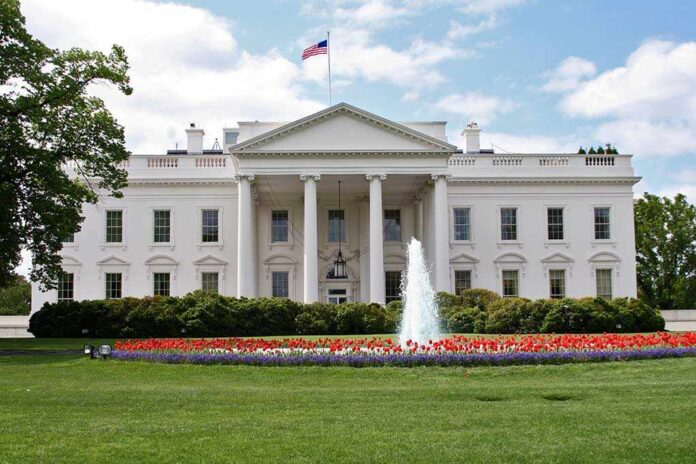
A new architect’s vision for a $300M White House ballroom sparks debates on fiscal responsibility and priorities.
Story Highlights
- President Trump appoints a new architect for the White House ballroom project.
- The $300 million project raises questions about fiscal priorities.
- Conservatives question the necessity of such a grand expenditure.
- Debates arise over public versus private funding for the project.
Trump’s Bold Move: A New Vision for the White House
President Trump has appointed a new architect to lead the ambitious $300 million White House ballroom project. This decision marks a significant shift in the administration’s approach to shaping the iconic residence. The selection of a new architect comes amidst concerns over the project’s scale and budget, reflecting the administration’s desire to leave a lasting legacy. The ballroom is intended to host high-profile events, aligning with Trump’s vision of a grand and modern White House.
With a budget of $300 million, the White House ballroom project has sparked significant debate among conservatives who question the fiscal priorities of such an endeavor. Many argue that the funds could be better allocated towards pressing national issues such as infrastructure, healthcare, and reducing the national debt. This perspective highlights a core conservative value of fiscal responsibility, urging the administration to consider the broader implications of this costly project.
Public versus Private Funding: A Contentious Debate
The debate over how to fund the White House ballroom project has been a contentious issue. While some advocate for private funding to minimize taxpayer burden, others argue that such a significant addition to a public institution should be funded by the government. This debate touches on broader themes of government overreach and the appropriate use of public funds, resonating with conservatives who prioritize limited government and individual liberty.
The project’s grand scale has also drawn criticism from those who believe it detracts from the White House’s historical character. Preservationists and traditionalists argue that the expansion risks overshadowing the building’s historical significance. This concern underscores the importance of maintaining traditional principles and respecting historical legacies, values that align with a conservative worldview.
Looking Ahead: Implications for the Future
As construction of the White House ballroom progresses, its potential impact on diplomatic protocols and national prestige remains a key consideration. A 900-seat venue within the historic residence could redefine how state events are conducted, offering a more expansive setting for international diplomacy. This aspect of the project presents both opportunities and challenges, as it could enhance the nation’s global standing while also inviting scrutiny over its cost and necessity.
Ultimately, the White House ballroom project raises important questions about priorities, funding, and historical preservation. Conservatives will continue to monitor the project’s development, advocating for transparency and fiscal responsibility. As the Trump administration moves forward with this ambitious endeavor, the conversation surrounding its implications will undoubtedly persist, reflecting the core values and concerns of the conservative community.
Sources:
The White House Announces White House Ballroom Construction to Begin