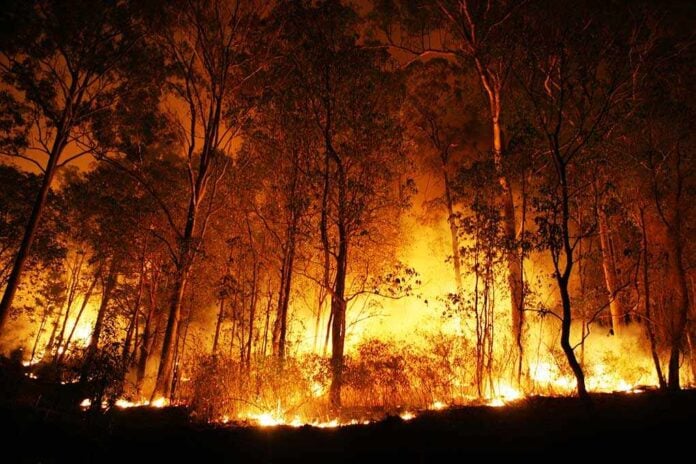
Bipartisan lawmakers are finally taking action to combat devastating wildfires with a bold plan that puts land management back into the hands of experts, challenging years of misguided environmental policies that have left American forests vulnerable to catastrophic fires.
Key Takeaways
- The National Prescribed Fire Act of 2025 would increase controlled burns by 10% annually, targeting at least 1 million acres per year to prevent catastrophic wildfires.
- A $300 million funding allocation would support prescribed burns on federal, state, and private lands while developing a trained workforce.
- The bipartisan bill would streamline permitting processes and provide more flexibility for states to conduct controlled burns during safer winter months.
- Previous versions of the legislation failed to advance, but growing concerns over wildfire costs and public health impacts may help this version succeed.
Conservative Land Management Returns with Bipartisan Support
A bipartisan coalition including Senators Ron Wyden and Ted Budd, along with Representatives Kim Schrier and David Valadao, has reintroduced the National Prescribed Fire Act to combat the growing wildfire crisis. The legislation represents a return to common-sense land management practices that conservative land stewards have long advocated for. After decades of environmental restrictions that prevented proper forest management, this bill aims to increase prescribed burns by 10% annually on federal lands, targeting at least 1 million acres per year.
“Following the devastation caused by Hurricane Helene, thousands of acres of North Carolina forest were left destroyed. Now, these downed trees and piles of leaves represent a serious wildfire risk,” said Senator Budd.
Funding and Implementation Strategy
The bill authorizes $300 million for prescribed burns across various types of land, addressing years of underfunding for proper forest management. This substantial investment would allow the Forest Service and Department of Interior to conduct controlled burns year-round, with a focus on safer conditions during winter and early spring. By implementing burns during cooler months, the legislation aims to prevent the summer infernos that have devastated Western states in recent years, costing taxpayers billions in emergency response and rebuilding.
“In California, we understand the dangerous impact of wildfires — from damage to property to loss of life,” Senator Budd said. “By prescribing controlled burns to fire-adapted land in a safe and supervised way, we can limit dangerous fuel buildup and help reduce the threat of future wildfires.”
Building a Skilled Workforce
A key component of the legislation establishes a workforce development program for training and hiring prescribed fire practitioners. This initiative would partner with tribal nations, local fire departments, and conservation groups to build expertise in controlled burning techniques. The program would provide grants supporting training for underserved communities, military veterans, and formerly incarcerated individuals, creating jobs while addressing the critical shortage of qualified fire management personnel that has hampered proper land management for decades.
Cutting Through Environmental Red Tape
One of the most significant aspects of the bill addresses the bureaucratic hurdles that have prevented effective land management. The legislation provides tools for smoke management and streamlines permitting processes that have historically delayed necessary burns. By improving coordination between land managers and air quality agencies, the bill aims to eliminate the regulatory roadblocks that have accumulated under previous administrations, allowing for more effective and timely implementation of prescribed burns to protect communities and natural resources.
“Here in Washington State, we experience devastating wildfires every year. That’s why Congress must act now and address this issue,” said Representative Schrier.
Third Time’s the Charm?
The National Prescribed Fire Act was previously introduced in 2021 and 2024 but failed to advance out of committee. However, with endorsements from multiple conservation and agricultural organizations, including The Nature Conservancy and Tall Timbers, the bill may finally gain traction. The growing concerns over wildfire costs, coupled with increased awareness of the effectiveness of prescribed burns in preventing catastrophic fires, have created a more favorable environment for passage. For rural communities that have endured years of dangerous wildfires, this legislation offers hope for a return to sensible land management.