

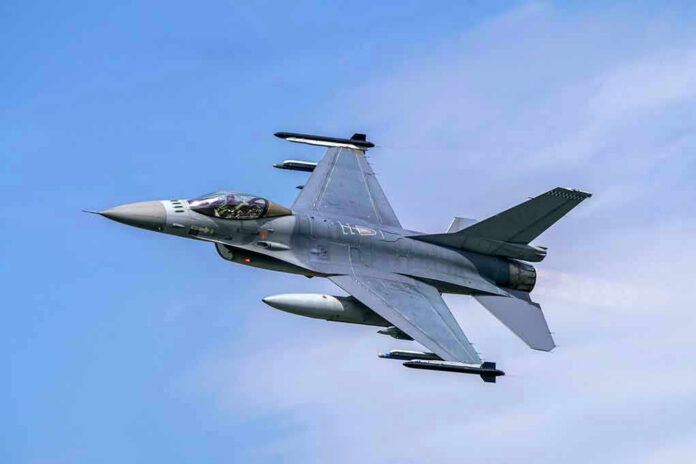
America is quietly fielding an AI-driven electronic warfare capability on combat-bound F-16s—an unmistakable signal that Washington is preparing for a high-end fight in the Middle East.
Quick Take
- Open-source tracking and imagery indicate 12 South Carolina Air National Guard F-16CJ “Wild Weasel” jets transited the Atlantic toward the Middle East carrying “Angry Kitten” EW pods.
- The jets staged through Lajes Air Base in the Azores on Feb. 17 and departed east on Feb. 18 with tanker support, consistent with a rapid deployment timeline.
- “Angry Kitten” is described as a machine-learning-enabled jammer/spoofer that reacts in real time to radar threats, not a fixed, pre-programmed system.
- The loadout aligns with SEAD/DEAD missions using HARM targeting systems and AGM-88 missiles—designed to find, bait, and destroy enemy air defenses.
F-16 “Wild Weasels” Move East as Iran Tensions Stay Hot
Open-source analysts and multiple defense outlets reported that 12 Block 52 F-16CJ Vipers from the 169th Fighter Wing—South Carolina’s Air National Guard “Swamp Foxes”—were seen crossing the Atlantic and heading toward the Middle East. The aircraft were photographed at Lajes Air Base in the Azores on Feb. 17 before departing east on Feb. 18, with KC-46A tanker support reported as part of the movement. The final destination base was not confirmed in the reporting.
The deployment matters because the F-16CJ is a specialized suppression platform built for the “Wild Weasel” mission—hunting surface-to-air missile sites by provoking enemy radars to light up, then targeting them. Reporting tied this movement to the broader U.S. force posture around Iran as diplomatic progress appears stalled. Several sources also note officials have hinted at military options if talks fail, though no official statement publicly confirmed the “Angry Kitten” pod deployment.
What “Angry Kitten” Adds: Adaptive Jamming, Spoofing, and Survivability
“Angry Kitten,” commonly associated with the ALQ-167 pod, is described as bringing machine-learning-enabled electronic warfare to a non-stealth, fourth-generation fighter. Rather than relying only on preloaded threat libraries, the system is portrayed as capturing and analyzing radar emissions and then selecting jamming or spoofing responses in real time. That concept is aimed at improving survivability in contested airspace where modern air defenses can shift frequencies, modes, and tactics quickly.
Development and testing also suggest this is not a brand-new science project. Reporting places the program’s origins more than a decade ago in adversary training, with first flights on F-16s around 2017 and additional testing on platforms including the A-10, MQ-9 Reaper, HC-130J, and F/A-18. If these pods are now appearing on operational F-16CJs headed into an active theater, it implies the Air Force believes the system is mature enough to move from exercises into real-world deterrence—or combat readiness.
Why This Loadout Points to SEAD/DEAD—Not Routine Presence Patrols
Details repeated across the research point to a configuration designed for dismantling integrated air defenses. The F-16CJ’s mission set is typically paired with HARM targeting capability and AGM-88 anti-radiation missiles that home in on radar emitters. That combination supports SEAD/DEAD operations intended to open corridors for follow-on aircraft by degrading tracking radars and missile batteries. Several sources specifically connect the posture to concerns about Iranian air defense systems such as the S-300PMU-2 and Iran’s indigenous Bavar-373.
That does not prove a strike is imminent, and the reporting itself acknowledges uncertainty about whether this is the first true combat deployment of the pod. It does, however, reflect a pattern: when the U.S. expects sophisticated surface-to-air threats, it surges tankers, electronic warfare support, and specialized shooters. For Americans who prefer limited wars and clear objectives, the key issue is whether deterrence stays deterrence—or slides into open-ended escalation without transparent goals.
What to Watch Next: Basing, Rules of Engagement, and Escalation Signals
Several facts remain unconfirmed in open reporting, including precisely where the F-16s are based in-theater and whether they will conduct operational missions beyond presence and training. Watch for follow-on indicators: additional tanker flows, more electronic warfare assets, or allied basing announcements that would support sustained operations. Also watch whether U.S. leaders publicly define objectives and constraints, since the difference between a defensive posture and a strike package is often visible in logistics and tasking before it is visible in headlines.
F-16s Heading To Middle East Equipped With Angry Kitten Electronic Warfare Podshttps://t.co/dCRT3ZMFYy
— SPEEA (@speea) February 21, 2026
The bigger takeaway is technological and strategic at the same time. The Air Force appears to be betting that “software-defined survivability”—adaptable electronic warfare that can evolve rapidly—can help keep fourth-generation aircraft relevant against modern air defenses. If that bet pays off, it strengthens U.S. deterrence without automatically requiring new wars. If it fails, it risks pilots and platforms in some of the world’s most dangerous airspace, where adversaries have invested heavily in radar-guided missiles and layered defenses.
Sources:
F-16CJ Vipers deploy to Middle East with Angry Kitten Electronic Warfare Pods
US deploys F-16s with Angry Kitten electronic warfare pod to Middle East
F-16s Heading To Middle East Equipped With Angry Kitten Electronic Warfare Pods
US Relies Adaptable Electronic Pods F16
America equips F-16s bound for Iran with Angry Kitten software: why
Final Pieces Moving Into Place For Potential Attack On Iran