
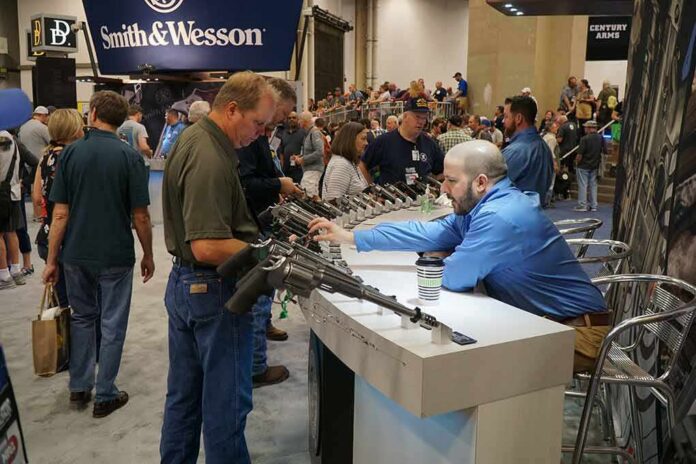
At a crowded South Carolina gun show, a customer shot a deputy working security, and the deputy fired back and killed him, stopping the threat, authorities said.
Story Snapshot
- Deputy shot while working security at a Columbia gun show; suspect killed after firing at him, officials said.
- Authorities identified the deceased as 34-year-old Telvin Pierre Portee; he died at the scene.
- The deputy had surgery and was reported in stable condition; no ongoing public threat was reported.
- State agents took over the investigation under standard procedure for officer-involved shootings.
What Authorities Say Happened at the Jamil Temple
Lexington County officials said the shooting happened November 14, 2026, at the Jamil Temple in Columbia during a South Carolina Arms Collectors Association gun and knife show. A customer fired at a deputy who was working security. The deputy returned fire and killed the customer on site. The sheriff’s office reported the deputy was hit, taken to a hospital, and had surgery. Officials said there was no ongoing threat to the public after the scene was secured.
Lexington County authorities and the county coroner identified the deceased as Telvin Pierre Portee, age 34. Officials said Portee died at the scene from a gunshot wound. Reports described the deputy as a Lexington County deputy, but did not release the deputy’s name. The event location and timing were confirmed by multiple outlets that cited the sheriff’s office and local officials. Those reports matched on the key facts of the exchange.
Deputy’s Condition and Immediate Safety Measures
The sheriff’s office said the deputy suffered a gunshot wound and was taken into surgery. Officials later described the deputy’s condition as stable. Law enforcement cleared the venue and checked for any other threats. After the exchange ended, officials told the public there was no further danger linked to the incident. That message aimed to calm attendees and families who heard about gunfire at an already sensitive setting.
Authorities requested the South Carolina Law Enforcement Division to lead the investigation, which is standard when a deputy uses deadly force. That step separates the investigative role from the local agency involved in the shooting. It also preserves evidence and centralizes witness interviews. Officials did not release details such as the type of firearm used, the number of shots fired, or the exact distance between the men during the exchange.
Why Use-of-Force Law Matters in a Crowded Venue
Courts judge police force by what a reasonable officer would do in the moment. The Supreme Court’s Graham v. Connor ruling says reasonableness depends on the threat, the severity of the situation, and how fast events unfold. If a person fires at an officer, the law supports a swift response to stop the threat. The core account here states the customer shot first, and the deputy returned fire to end the danger.
Deputy kills man accused of shooting at him during gun show. Link in bio. pic.twitter.com/dvNUain0yx
— KWQC TV6 News (@kwqcnews) November 16, 2026
When deadly force is reviewed, investigators look at scene evidence, witness statements, and video if available. They consider whether the officer had reason to believe lives were at risk. Tennessee v. Garner sets standards when force stops a violent threat. In a busy hall filled with people, even one shot raises the risk to many bystanders. That is why officials moved fast to secure the area and stress that no continuing threat remained.
What This Event Says About Public Safety and Trust
Many Americans across the political spectrum worry that public safety feels shaky and that leaders rarely fix root problems. A gun show is a place where people expect strict safety rules and trained security. Yet danger still came suddenly, and a deputy was shot while protecting the crowd. That hard fact pushes a shared concern: our systems must work in real time, not just on paper or in speeches from distant officials.
People want straight answers, quick care for the injured, and a fair review of force. Officials handed the case to state investigators, which follows the rulebook. The public will look for clear findings that explain each step taken at the scene. Trust grows when leaders act fast, tell the truth, and show the evidence that supports their calls during a crisis in a crowded public place.
Sources:
us.cnn.com, apnews.com, coasttv.com, hastingstribune.com, panhandle.newschannelnebraska.com
© newsworthy.news 2026. All rights reserved.