

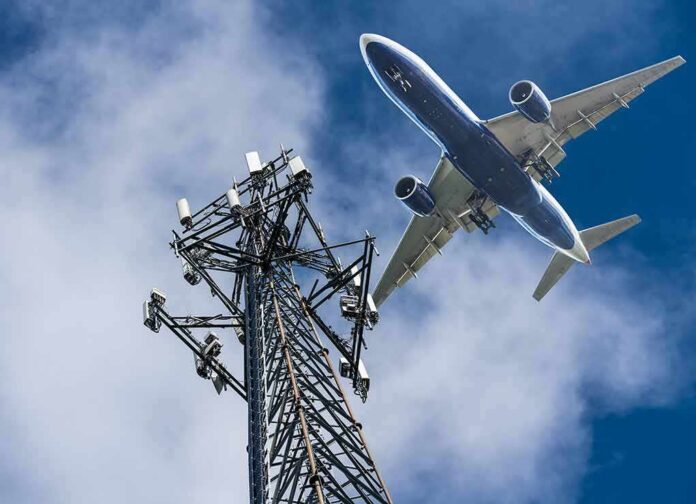
A rare nationwide ground stop froze U.S. departures after air traffic control communications faltered, exposing how a single weak link can stall the country.
Story Snapshot
- The Federal Aviation Administration halted all departing flights nationwide for safety.
- Officials tied the stop to communication problems at multiple control centers.
- Flights already in the air continued; international arrivals were handled case by case.
- An earlier Chicago outage preceded the national order and showed local strain.
What Triggered The Nationwide Ground Stop
The Federal Aviation Administration (FAA) ordered a national stop of departing flights on Friday. The agency said the action was due to “extraordinary circumstances” and safety needs. The FAA linked the stop to communication issues affecting air traffic control centers across the country. Transportation Secretary Sean Duffy said technicians were investigating the problem and that all centers were impacted. The FAA did not publish technical details during the disruption, but stressed safety as the reason for the broad pause.
Officials structured the stop to match the risk. Departures were paused nationwide, while planes already airborne were allowed to continue and land. International flights heading to the United States were handled one by one. This kept the skies from becoming more crowded while the FAA assessed the problem. The approach mirrored past safety playbooks when central systems falter and predictability drops in the National Airspace System.
Where The Trouble Showed Up First
Chicago’s two main airports, O’Hare and Midway, saw an earlier ground stop tied to an equipment outage. That local action hinted at wider strain before the national order landed. The FAA later connected the broader step to communication problems across multiple centers. Public reports did not show whether the Chicago outage and the wider communications issue were the same cause. The link remains unclear based on what officials released during the event.
The scope and speed of the order stood out because nationwide stops are rare. In January 2023, the FAA grounded departures after a system failure with pilot alerts. The Government Accountability Office called that action the first nationwide ground stop since the September 11, 2001 attacks. That history shows why Friday’s move drew attention. When central tools fail, officials sometimes stop departures to keep risk from compounding fast.
How The FAA Managed Safety And Traffic
The FAA’s decision aimed to reduce near-term hazards. When controllers cannot trust voice or data links, they lose the tools that space out flights and route them safely. Stopping departures lowers the number of moving aircraft and buys time to fix the problem. Handling international arrivals case by case limits new entries until capacity and oversight return. This pattern reflects standard safety practice when central communications are unstable.
US lifts flight ground stop after a telecom outage disrupted 7,000 flights
The FAA halt ran from 3:54 pm to 11:30 pm Eastern on Friday.
Sean Duffy blamed ageing infrastructure; Air India warned affected travellers.
— Pramod (@vpramodraju) November 14, 2026
Officials did not immediately identify the exact technical failure or whether a cyberattack was involved. Security-focused reporting said the trigger was unknown as of the initial statements. That left open questions on whether the issue was hardware, software, network, or human error. The priority on Friday was to keep aircraft and passengers safe while technicians worked to restore normal operations and confirm the root cause.
Sources:
washingtontimes.com, edition.cnn.com, cbs58.com, cp24.com, wsvn.com, 6abc.com, airlines.org
© newsworthy.news 2026. All rights reserved.