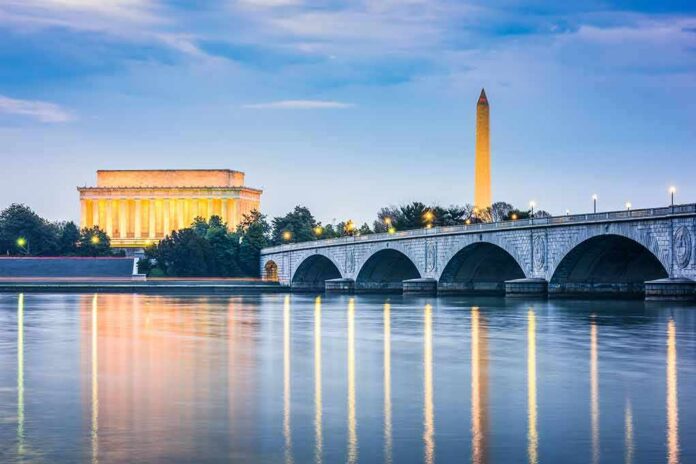
A no-bid contract tied to a political donor at one of America’s most iconic memorials is now fueling new outrage over how Washington spends public money.
Story Snapshot
- National Park Service issued a $1.7 million no-bid deal for the Lincoln Memorial Reflecting Pool to Greenwater Services.
- Reports link the firm to longtime Trump donor John J. Cafaro through the J.J. Cafaro Investment Trust.
- Lawmakers are pressing for answers on why competitive bidding was bypassed and whether favoritism played a role.
- Kristi Noem, in a separate dispute, attacked reporting on no-bid awards as “libelous,” while critics cite records indicating noncompetitive awards.
What the contract is and why it matters
The National Park Service awarded a $1.7 million no-bid contract to Greenwater Services to install a water purification system in the Lincoln Memorial Reflecting Pool this spring, according to federal contracting records reported by major outlets. The firm is tied to the J.J. Cafaro Investment Trust, led by John J. Cafaro, a longtime supporter of President Trump, those reports state. The bypass of open competition is unusual and raises questions about procurement fairness and value for taxpayers.
Public records and reporting also describe larger, related work on the Reflecting Pool, including a separate multimillion-dollar contract to reseal, waterproof, and repaint the basin. Members of Congress have asked why urgent or sole-source pathways were used, and whether proper justifications were filed on time. These questions reflect a broader pattern: agencies sometimes invoke urgency exceptions that shrink competition, which watchdogs warn can heighten favoritism risks.
How donor ties and no-bid awards feed distrust
Reports linking Greenwater Services to a Trump donor intensified scrutiny because donations and noncompetitive awards are a combustible mix in the public mind. Academic and government oversight work has long found that noncompetitive contracts, even when lawful, can erode trust and invite waste if oversight is weak. The Government Accountability Office has urged tighter files, clearer justifications, and better recordkeeping in urgent awards, especially when speed compresses normal checks. These safeguards protect both taxpayers and honest vendors.
Americans across the political spectrum see a familiar loop here: insiders benefit while regular people get rising costs and fewer choices. Conservatives see echoes of bloated projects and green mandates that miss basic fixes. Liberals see concentrated power and shrinking accountability. Both sides worry that powerful donors and officials bend rules others must follow. When agencies skip bids at national landmarks, the symbolism makes the concern feel even sharper to voters who already doubt Washington’s fairness.
Kristi Noem’s broader no-bid fight adds fuel
Former Homeland Security Secretary Kristi Noem has blasted reporting about noncompetitive awards in a separate advertising-contract dispute, calling one story “factually incorrect” and “libelous,” and seeking a retraction. Congressional Democrats counter that records show noncompetitive paths were used, and they pressed for investigations and disclosures. While this is a distinct matter from the Reflecting Pool, the timing and themes overlap, reinforcing a public sense that emergency labels can become shortcuts that benefit the well connected.
For readers trying to sort claims from noise, a few tests help. First, follow the paperwork: Was a written justification for limited competition completed and approved ahead of award, as rules require? Second, track vendor history: Has the firm done similar federal work before? Third, check cost growth: Were later add-ons documented and competed when possible? Clear answers to these questions can confirm whether urgency was real necessity or a pretext that shut out rivals.
What accountability should look like now
Congress and inspectors general should obtain the full justification and approval files, market research, and internal emails related to the Greenwater Services award and the broader Reflecting Pool work. The National Park Service should publish a plain-English summary of why competition was not feasible at the time and whether alternatives were considered. If rules were followed, transparency can clear the air. If shortcuts breached policy, agencies should rebid, claw back funds if warranted, and apply stronger guardrails going forward.
Bottom line for taxpayers
America needs fast fixes when systems fail, but speed without sunlight breeds suspicion. The Reflecting Pool case combines a cherished public site, a no-bid award, and donor ties. That mix demands clear records and straight answers so people know whether the government worked for them, not for insiders. Real oversight protects every side: it shields honest officials from unfair attacks and stops bad deals before they waste another dollar. Trust is earned by proof, not promises.
Sources:
mediaite.com, nytimes.com, cbsnews.com, usatoday.com, vindy.com, independent.co.uk, newsweek.com
© newsworthy.news 2026. All rights reserved.