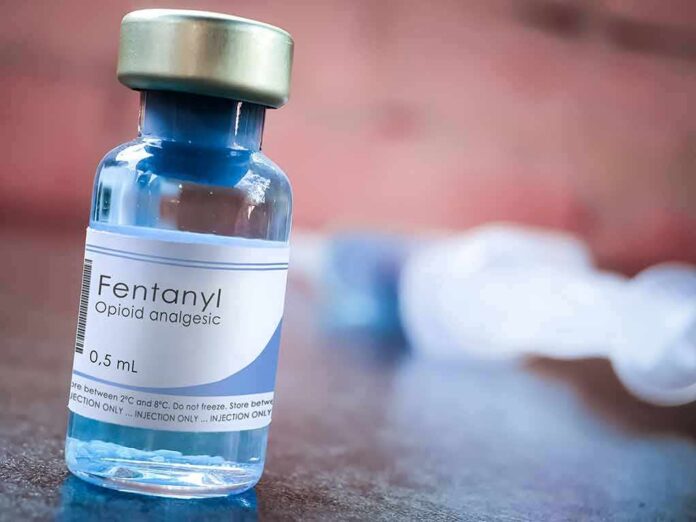
A retired Navy intelligence officer just said China’s ruling party bears blame for more than 800,000 American fentanyl deaths, pushing a raw national-security fight into prime time.
Story Snapshot
- Retired Captain James Fanell said the Chinese Communist Party is linked to 800,000-plus U.S. fentanyl deaths on Bannon’s show.
- Congressional witnesses describe China as an upstream “enabler,” especially for precursor chemicals, while disputing simple blame.
- Chinese officials reject responsibility and say the crisis is America’s problem, not China’s.
- Lawmakers from both parties have probed China’s role in precursor supply chains that fuel fentanyl in the U.S..
What Fanell Claimed On-Air
Retired Captain James Fanell told Steve Bannon’s “War Room” that the Chinese Communist Party has “killed 800,000 or more Americans with fentanyl.” He framed the toll as part of a larger strategic threat and urged the White House to respond with forceful policy. The claim aired on September 26, 2026, and immediately drew attention because it put a specific death count on China’s alleged role, linking narcotics to national security in stark terms.
Steve Bannon framed Fanell as offering a clear-eyed assessment of China’s behavior, not just throwing charges. The segment connected fentanyl deaths to a broader pattern of state-backed pressure on the United States. The number itself, 800,000-plus, landed hard because it echoed years of overdose losses that many families have felt across regions and class lines. The show’s thrust was simple: hold Beijing to account and use policy leverage to stop the poison.
What Congress And Experts Say About China’s Role
House Foreign Affairs witnesses in June 2026 described China as an “upstream enabler,” stressing that Chinese industrial and financial networks are key risk points in the fentanyl supply chain. They said the risk shifted from finished fentanyl to precursor chemicals and online brokers over the last decade. That view underscores material Chinese links, while warning that the crisis is a chain with many actors, including Mexican cartels and U.S. dealers and demand.
Other testimony told lawmakers that Chinese precursor chemicals form the backbone of the supply chain moving fentanyl into American communities. That position argues Beijing can choke key inputs if it chooses, and that tighter controls and enforcement could save lives. Bipartisan hearings since 2024 have pressed the same issue: how to cut the flow of precursors, lab gear, and money that make fentanyl cheap, potent, and everywhere in the U.S. market.
Beijing’s Denial And The Dispute Over Blame
Chinese officials have repeatedly denied responsibility, saying the overdose crisis is an American problem tied to domestic demand and criminal networks. Reuters has reported Beijing’s stance that it is not the main source of fentanyl precursors and that Washington’s accusations are wrong. China’s public line signals no admission of blame, even while it highlights steps it says it has taken on drug controls since past years.
The split is sharp: some U.S. voices cite state support or subsidies tied to chemical exports, while others warn that a blanket blame number oversimplifies a complex, cross-border chain. That nuance matters for policy. If precursors and brokers in China are key, then targeted finance, export controls, and customs pressure may work. If the crisis is broader, then U.S. border, policing, treatment, and recovery must all scale up at the same time.
Why This Hits A Nerve For Voters
Families see empty chairs at the table and want action, not speeches. Conservatives see a foreign adversary feeding cartels and a federal government that struggles to secure the border and punish bad actors. Liberals see a lethal drug market tied to profit, weak oversight, and failing health systems. Both sides share a core fear: powerful interests profit while regular people pay the price. That is why Fanell’s on-air number stirred such strong reactions.
Americans also see a familiar pattern. Leaders trade blame, while overdose deaths stack up and communities hollow out. People want measures that bite: hit illicit finance, block precursor exports, disrupt labs, and flood the zone with treatment and recovery. Congress holds hearings, but voters want results they can feel in their towns. The test now is whether Washington can turn hard talk about supply chains into fewer funerals next year.
What To Watch Next
Watch for new sanctions on chemical firms and logistics brokers tied to precursors. Track whether China increases real inspections and prosecutions that slow exports. Look for joint actions with Mexico against lab networks. At home, watch overdose data and treatment access. If the supply squeeze works, deaths should fall further. If not, the pressure will grow for tougher steps—economic, diplomatic, and criminal—to shut the pipeline at its source and along every link.
Sources:
thegatewaypundit.com, docs.house.gov, hsgac.senate.gov
© newsworthy.news 2026. All rights reserved.