Trump once blasted “pomp for Beijing,” yet his White House just staged one of the biggest welcomes Washington has given Xi.
Story Snapshot
- Trump’s 2012 post slammed Obama for honoring Xi; that quote is now resurfacing.
- President Trump personally greeted Xi at Joint Base Andrews, a rare step in protocol.
- The White House planned a large arrival ceremony with troops, flags, and flyover.
- Advisers frame Trump’s approach as pragmatic, focused on deals and stability.
What Trump Criticized In 2012 And What Happened This Week
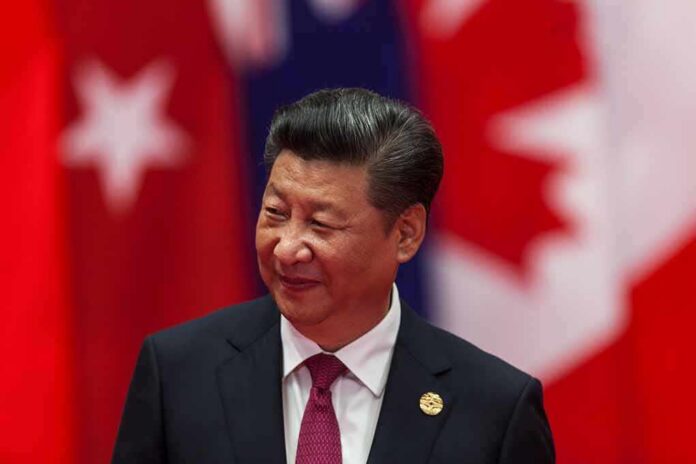
Donald Trump’s 2012 post said it was “so wrong” for President Barack Obama to host China’s then–vice president Xi Jinping with full honors at the Pentagon, with “music and cannons”. This week, President Trump welcomed Xi, now China’s head of state, with high ceremony in Washington. Reports described a large arrival event, flags, music, and military pageantry at the White House and beyond. The contrast has fueled charges of a turnaround as the clips spread across media.
News accounts say the White House planned an arrival ceremony featuring nearly 500 service members, United States and Chinese flags, the Marine Band playing both anthems, and a military flyover. That level of display is typical of a formal state visit. It is also the kind of spectacle that drives public debate, because people judge what leaders honor. The scale and visuals invite simple “then versus now” comparisons that often crowd out protocol fine print.
Protocol Nuance And Why Comparisons Get Messy
Obama honored Xi in 2012 when Xi was vice president, not head of state. Trump’s welcome is for a state visit, which is the highest level of ceremony in United States diplomacy. That difference matters for fairness in judging the two events. Still, the current welcome also went beyond the usual script. Coverage highlighted that Trump personally greeted Xi at Joint Base Andrews, which experts called a rare or unusual step for a president. That fueled fresh debate about motives and optics.
Media and commentators stress that formal honors during a state visit are often set by protocol offices, not the president alone. That can blur who chose each element. But some choices stand out as personal. A planeside or tarmac greeting by a president signals special attention. It is not standard for every visitor. When leaders reach for bigger stagecraft, they own the message that the show sends, regardless of who drew up the base script. That is why the side‑by‑side reels resonate.
What Supporters Say Is The Real Aim
President Trump and his allies describe his China policy as hardheaded and practical. They say the focus is trade, technology, and narrow deals that ease risk. The Associated Press quoted Trump saying the United States has a “very good” trading relationship and a “very good relationship with President Xi,” framing the outreach as normal diplomacy between rivals. Analysts also describe this engagement as managed competition, which relies on steady leader‑to‑leader talks to avoid crises.
That lens helps explain the pomp. Big visuals can set a tone that cools tensions before tough talks on tariffs, artificial intelligence, Taiwan, or Iran. The risk is that pageantry can look like praise, not leverage. For many Americans, left and right, it feels like leaders dress up meetings with powerful rivals while dodging hard fixes at home. That fuels cynicism that elites care more about optics than outcomes, and more about access than accountability.
How Voters Across The Spectrum May Read This
Conservatives who resent globalism may ask why a communist leader gets flyovers while factories struggle. Liberals who oppose “America First” may see selective outrage, since both parties use pomp when it suits them. A growing middle sees the pattern: leaders condemn each other’s ceremonies, then copy them in office. That cycle deepens the sense that Washington runs on showmanship and short news hits, while costs, crime, and border pressures grind on without real relief.
What We Know, What We Don’t
We know Trump’s 2012 post condemned Obama’s honors for Xi, and we know the current visit featured large ceremony and an unusual planeside greeting by the president. We do not have public records showing who approved each ceremonial element this week. We also do not have proof that Trump’s goal was flattery rather than bargaining. The strongest facts show a sharp visual contrast and a protocol climb, while motives and internal planning remain unclear in the public file.
Why This Matters Beyond The Optics
United States‑China ties shape prices, jobs, and security. When ceremony becomes the headline, the public can miss what was traded, promised, or delayed. If pomp brings calm that leads to real gains, most people will not mind the show. If it delivers little, today’s flyovers will read like more elite theater. Citizens should watch for concrete items on trade barriers, fentanyl chemicals, and military hotlines. Those results, not the red carpet, are what change daily life.
Sources:
feedpress.me, apnews.com, abcnews.com, arabnews.com, brookings.edu, bruegel.org
© newsworthy.news 2026. All rights reserved.