

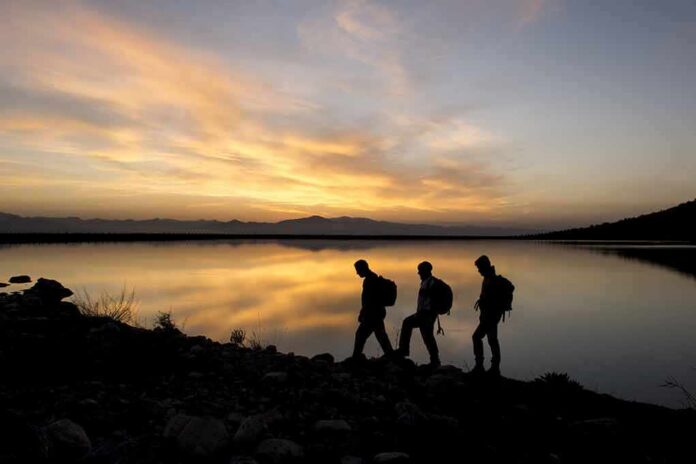
A 70-year-old solo hiker missing for a week on Isle Royale was found alive and airlifted to care, thanks to fast help from backpackers and a coordinated rescue by federal and state teams.
Story Highlights
- Backpackers found Craig Berg alive after a week alone on Isle Royale.
- The United States Coast Guard hoisted him to a helicopter for evacuation.
- Officials said he was injured and showing signs of hypothermia.
- Data show solo hikers are overrepresented in rescue cases across parks.
What Rescuers Say Happened
The United States Coast Guard said crews, with Michigan State Police support, rescued a man who went missing on September 5 while hiking on Isle Royale National Park in Lake Superior. The Coast Guard reported the man was injured and ailing when they reached him. An aircrew hoisted him from the island and flew him off for medical treatment. Officials did not release full medical details, which is common in rescue cases to protect privacy.
ABC News reported that a helicopter crew from the Coast Guard’s Air Station in Traverse City lifted the hiker and flew him to Marquette Regional Airport in Michigan, where emergency medical staff took over care. Local coverage shared video of the hoist that showed responders guiding a rescue basket while the survivor moved his hands and stayed responsive during the lift. These steps match standard rescue protocols for remote islands with rough terrain and limited road access.
How He Was Found On The Island
The National Park Service said backpackers on the island found the hiker alive after more than a week missing and alerted authorities. Isle Royale is one of the most isolated parks in the system, which makes ground searches slower and more dangerous. Rangers, state police, and Coast Guard units coordinated air and ground assets to reach and extract the patient after the alert. That team approach often decides whether a missing person survives.
Family and media reports identified the hiker as Craig Berg, age 70, of Royal Oak, Michigan. He arrived at Isle Royale in late August for a solo trek and was due to return on September 5 but did not make it back as planned. Search operations scaled up after he was reported overdue. Park officials asked visitors with any sightings to call in tips, a practice that often creates the lead that breaks a case open in remote areas.
Why Solo Hikes Drive Many Rescues
Search-and-rescue data show people hiking alone appear in a large share of incidents in wilderness areas. A veteran search-and-rescue statistician says about 58 percent of cases involve solo hikers, with men making up a big portion of searches. A peer-reviewed study of national parks found thousands of operations over several years, with many linked to day hiking, fatigue, and limited gear, rather than rare dramatic events. These patterns match what happened here: a quick alert and a fast hoist likely saved a life.
For readers, two lessons stand out. First, tell someone your route and return time, and carry a way to signal for help. Second, travel with a partner when possible, especially in remote places with poor cell service. Parks and the Coast Guard train for these exact moments, but distance and weather can beat even the best teams. When hikers prepare and fellow visitors speak up fast, outcomes improve, even on a wild island in cold water.
Sources:
facebook.com, abcnews.com, freep.com, wtip.org, mprnews.org, upnorthlive.com
© newsworthy.news 2026. All rights reserved.