
Vladimir Putin warned he may seize European ships “anywhere” after Norway lawfully detained a Russian vessel under a court-ordered arbitration claim, raising real risks for global trade and sailors alike.
Story Highlights
- Putin called Western ship detentions “piracy” and vowed a mirror response if Europe proceeds.
- Norway seized the Russian vessel Professor Molchanov under a district court order tied to a $4.22 billion award for Ukraine’s Naftogaz.
- European Union actions target Russia’s “shadow fleet” as part of wider sanctions policy.
- Any tit-for-tat seizures could endanger crews, spike shipping costs, and widen the conflict’s economic fallout.
What Triggered Putin’s Threat
Russian President Vladimir Putin said Europe’s moves to detain Russian-linked vessels amount to “piracy” and warned that Russia would respond “in kind.” He added that Moscow could act beyond the waters where Europe conducts seizures, signaling a global scope for retaliation. His warning followed European steps to curb the so-called shadow fleet that moves Russian cargo under opaque ownership to skirt sanctions, a pressure track that Moscow rejects as unlawful.
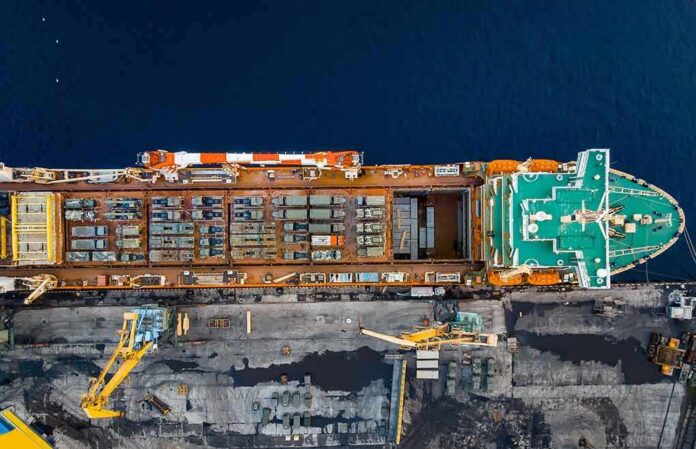
Norwegian authorities recently detained the Russian vessel Professor Molchanov at Svalbard. Ukraine’s state energy firm Naftogaz requested the action to enforce an international arbitral award. Naftogaz said a Norwegian court approved the seizure on August 31, 2026, as part of efforts to collect about $4.22 billion from the Russian Federation. This placed the arrest within a formal legal process, not an ad hoc maritime stop.
Why Norway Says The Seizure Was Lawful
Naftogaz described the detention as a court-backed enforcement step tied to a final arbitration decision. That framework rests on common legal tools used to collect judgments across borders. Associated Press reporting located the detention in Svalbard and linked it to the award, aligning with Naftogaz’s account. Russia condemned the move and demanded the ship’s release, but did not present a court ruling that overturned Norway’s order.
European policy documents show that the European Union’s broader maritime rules target risky, underinsured, or opaque shipping used to dodge sanctions. These measures restrict port access and services to curb sanction evasion. European leaders argue this is enforcement of legal restrictions, not piracy. Russia contests that view and says maritime law is being abused against its operators, making the clash both legal and political.
How Retaliation Could Hit Ordinary People
Any Russian “mirror response” could put civilian crews and cargo at risk far from Europe. Shipping companies may pay more for insurance, reroute around danger zones, and pass costs to customers. That means higher prices for fuel, food, and goods in a world already squeezed by inflation and supply shocks. Ports and coastal towns that depend on trade would feel the pain first, while governments argue over law in courtrooms and at sea.
Both sides say they are defending the rule of law, but regular people see a familiar pattern. Powerful states stretch rules, and workers pay the price. Conservatives see failed globalism and weak deterrence. Liberals see growing corporate power and rising inequality. Both see elites who break systems and escape blame. This maritime fight fits that concern: legal words fly, but sailors and consumers carry the risk while leaders trade threats.
What To Watch Next
Watch whether any government actually seizes a European ship and where it happens. A single high-profile incident could set a hard precedent and trigger wider copycat moves. Track court rulings tied to Naftogaz’s award and any appeals that test how far asset seizures can go. Follow insurance rates, re-routing of tankers, and port advisories. Those market signals will show the real-world cost long before politicians admit the bill has arrived.
Sources:
euronews.com, brusselstimes.com, kyivpost.com, abcnews.com, thehill.com
© newsworthy.news 2026. All rights reserved.