A routine check on smoke at a Tacoma apartment complex ended with firefighters nearly blown off their feet by an electrical blast inside the building’s walls.
Story Snapshot
- A suspected failed transformer sent smoke through Spanish Hills Apartments before a sudden explosion inside an electrical room.
- Neighbor video shows firefighters in the doorway when the blast hits, yet no residents or firefighters were reported injured.
- Officials say an electrical arc ignited smoke when power was shut off, but the full technical cause is still under investigation.
- The event highlights aging and stressed power equipment as a quiet risk inside everyday housing, raising questions about utility maintenance and oversight.
How a Smoke Call Turned Into a Wall-Blowing Explosion
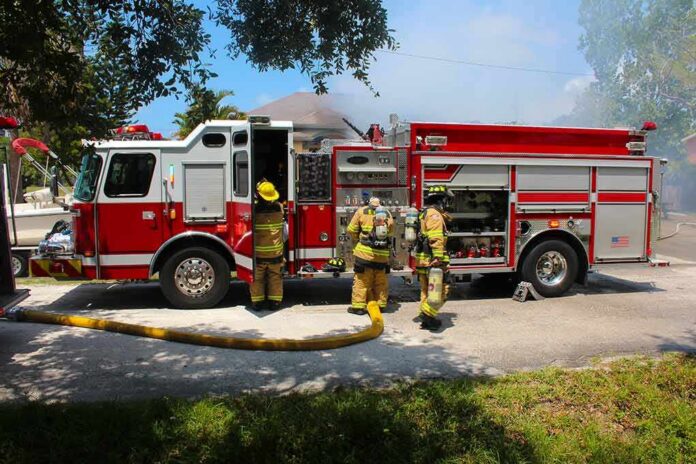
On Sunday evening, firefighters in Tacoma, Washington, arrived at the Spanish Hills Apartments after alarms and residents reported smoke coming from electrical conduit between units. Crews found no open flames but learned that a malfunctioning electrical transformer had pushed smoke into several buildings, which triggered the alarm system. About twenty minutes after firefighters reached the scene, an explosion tore through an electrical room, blowing debris out a back door and forcing crews to quickly evacuate nearby residents for safety.
Video taken by a neighbor shows firefighters standing just outside the electrical room, examining the problem, when a sudden blast erupts and throws them backward. Tacoma Fire spokesperson Chelsea Shephard later explained that when firefighters manually shut off power, electricity arced and ignited smoke already trapped in the space, causing the explosion inside the wall. Shephard said the blast was “pretty significant,” sending particle board and other material flying, yet by luck none of the firefighters or residents suffered injuries in the event.
What Officials Say Caused the Blast — And What They Do Not Yet Know
Fire investigators now suspect that a failed electrical transformer caused both the small fire and the larger explosion at the complex. Tacoma Fire Department officials stated that the malfunctioning transformer forced smoke through multiple structures, and the blast later occurred in the electrical room where crews shut down power to the building. Tacoma Public Utilities staff were on scene during the investigation, and later that night most buildings were cleared for residents to return, except the damaged structure where several units and about a dozen people remained displaced.
So far, officials have not released detailed engineering findings about exactly how the transformer failed or whether aging, design defects, or poor maintenance played a role. The cause remains under formal investigation, meaning the current explanation rests on early signs and professional judgment rather than a completed forensic report. No independent audit of the equipment has been shared with the public, and Tacoma Public Utilities has limited its public comments to safety and reoccupation updates, leaving many technical questions and possible responsibility issues unanswered.
Hidden Electrical Risks and Why This Incident Feels Bigger Than One Apartment Complex
Experts who study transformer failures say that most breakdowns do not happen out of the blue; they build over years of stress, heat, and worn-out insulation inside the equipment. Research on liquid-filled transformers shows that a large share of failures trace back to aging insulation, design or manufacturing defects, and long-term overheating, with only a small portion caused by rare events like lightning strikes. When insulation breaks down, normal electrical loads can suddenly become dangerous, leading to arcs, fires, or explosions that put the whole connected system at risk.
An explosion erupts at a Tacoma, Washington, apartment complex while firefighters investigate reports of smoke, sending crews scrambling for safety.
Officials say firefighters were responding to an electrical transformer malfunction when an explosion occurred in an electrical… pic.twitter.com/bWHOJnFHSB
— Fox News (@FoxNews) July 2, 2026
For regular Americans, this Tacoma blast taps into a wider frustration with how basic infrastructure is managed. People across the political spectrum may argue over energy policy, but many agree that large utilities and regulators often seem slow to modernize aging equipment or to fully explain failures when they happen. When an apartment wall explodes while families are making dinner and firefighters are doing their jobs, it feeds the sense that unseen systems are brittle, and that ordinary citizens are the ones left to deal with the aftermath while institutions stay vague and guarded.
Residents, Displacement, and Trust in Local Systems
The American Red Cross reported that the Spanish Hills complex includes five buildings, with one building directly affected by the fire and blast and roughly four units and twelve residents displaced overnight. The other buildings briefly lost power, but firefighters later cleared those residents to return to their homes after utilities checked the system. For the displaced families, the event means scrambling for housing and dealing with damage bills, even though there is no evidence they did anything wrong or could have avoided the danger inside shared electrical spaces they never see.
Events like this also test trust in local government and utility companies. Many residents and viewers of the viral videos see a clear physical failure but get only partial information about why it happened and what will change to prevent another blast. In a time when many Americans already feel the system favors powerful insiders over regular people, a sudden explosion in a modest apartment complex, linked to equipment that may be old or stressed, reinforces worries that safety and upkeep are often treated as optional until something literally blows up.
Sources:
facebook.com, kiro7.com, firehouse.com, instagram.com, yahoo.com
© newsworthy.news 2026. All rights reserved.