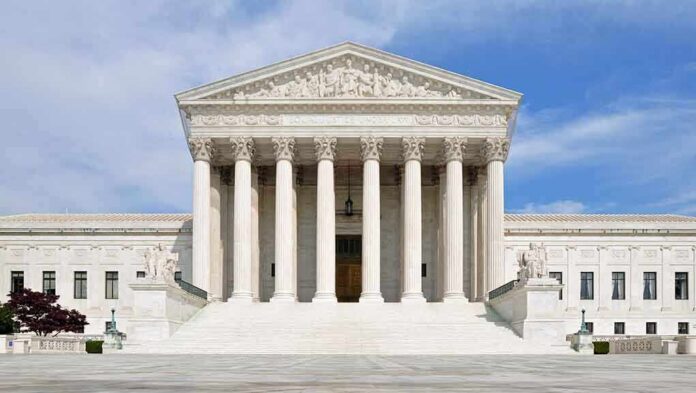
The Supreme Court’s move puts the country’s most debated rifle ban fight one step closer to a ruling that could reshape gun law across the map.
Quick Take
- The Supreme Court agreed to review challenges to semiautomatic rifle bans, including bans tied to the AR-15 platform.
- The petition argues that AR-15s are in common use and protected under the Second Amendment.
- Supporters of the bans say these laws target dangerous weapons and protect public safety.
- Lower courts have often upheld assault weapon bans, so this case could test that pattern.
Why the Court Took the Case
The justices agreed to hear a dispute over whether states and local governments can ban AR-15-style rifles and similar semiautomatic weapons. The petition filed in Viramontes v. Cook County says the Second and Fourteenth Amendments protect these firearms because they are widely owned by law-abiding citizens. That common-use claim sits at the center of the case and will likely shape the court’s analysis.
The legal fight is not new. The petition points to earlier Second Amendment rulings, including District of Columbia v. Heller and New York State Rifle & Pistol Association v. Bruen, as the framework for judging whether the bans can stand. A recent Supreme Court brief in a related case also noted that Justice Brett Kavanaugh said the court should likely address the AR-15 issue “in the next term or two.”
Why Gun-Rights Supporters See a Major Opening
Gun-rights advocates say the issue is about ordinary ownership, not fringe use. The filings cited in the research argue that AR-15s are common, popular, and lawful arms that fit the constitutional test laid out in prior cases. One cited analysis says the class of arms should not be treated as outside the Second Amendment simply because it is politically controversial.
That argument could matter because lower courts have often relied on older balancing tests or “dangerous and unusual” labels when upholding bans. Supporters of review say those rulings conflict with Bruen and with the idea that constitutional rights should not depend on a judge’s view of policy tradeoffs. The court’s decision to hear the case suggests at least some justices think the question is still open.
Why Ban Supporters Still Have a Strong Public Safety Case
Backers of the laws say the bans are aimed at weapons designed for high firepower and fast reloads, not ordinary hunting rifles. Cook County’s ordinance and Illinois’s statewide law both use feature-based definitions, including detachable magazines and pistol grips, to identify banned firearms. Connecticut’s law was passed after the Sandy Hook school shooting, and supporters frame it as a life-saving response to mass violence.
The Supreme Court announced Tuesday it will consider in its next session whether states and local governments can ban semiautomatic rifles like the AR-15.
The court cases challenge bans in Illinois and Connecticut. @FredLucasWH https://t.co/kZmBKjNYBK
— The Daily Signal (@DailySignal) July 1, 2026
The broader conflict is bigger than one rifle. It reflects a deeper split over how much power government should have to limit arms that many people legally own, yet many lawmakers still see as a public danger. That tension has helped turn the AR-15 into a symbol for both sides: for one side, a common arm protected by the Constitution, and for the other, a weapon that belongs in a narrow regulatory category.
What the Case Could Change Next
If the court rules against the bans, it could weaken similar laws in states and counties that have relied on the same legal logic. If the court upholds them, that would strengthen the view that governments may ban certain semiautomatic rifles even when millions of Americans own them. Either result would reach far beyond Illinois and Connecticut.
The case also shows how much of modern gun law now depends on a small number of Supreme Court votes. For readers on both sides, that is the larger story: elected officials have written aggressive laws, lower courts have sent mixed signals, and the final answer may now come from nine justices rather than the people or their state legislatures.
Sources:
reason.com, illinoiscourts.gov, x.com, instagram.com, phase5wsi.com, nycourts.gov, cdn.ca9.uscourts.gov, supremecourt.gov, reddit.com
© newsworthy.news 2026. All rights reserved.