When a 13-year-old dies on a city street and no one is held to account yet, trust in the system takes another hit.
Story Snapshot
- NYPD says an SUV struck two teens on a scooter in Harlem; one died, one was hurt [1].
- No arrests have been made as investigators work to piece together what happened [1].
- New York law limits scooter speeds and where they can ride, raising questions about compliance [12][13].
- Vehicle-versus-scooter crashes tend to be severe, especially for head injuries [20].
What Police Confirmed About the Harlem Crash
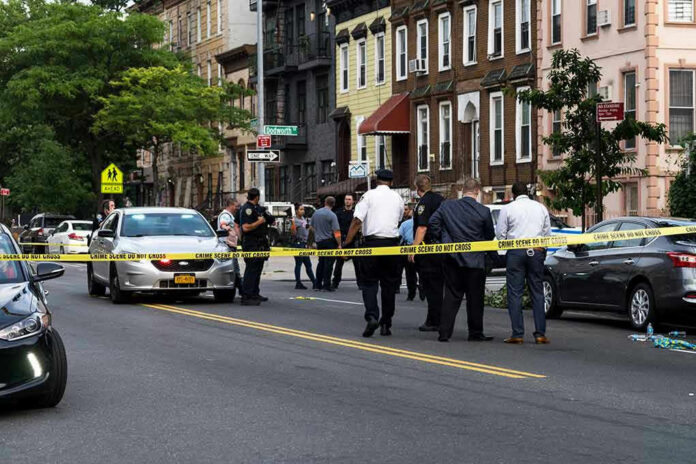
New York Police Department officials reported that two teens riding a motorized scooter collided head-on with an SUV in Harlem on Thursday night. A 13-year-old boy suffered a severe head injury and died at the hospital. A 14-year-old boy sustained a leg injury and is stable. Police said no arrests have been made, and the investigation remains open. Officials have not released details on speed, right of way, lighting, or potential traffic violations at the time of the crash [1].
Police have not said who, if anyone, is at fault. That silence is common after serious collisions because evidence collection takes time. Investigators typically review camera footage, witness accounts, vehicle damage, roadway markings, and lighting. They also look at whether either party broke traffic laws. Early headlines often skip these details, which fuels public anger and guesswork. Families want answers fast. So do drivers and riders who share the same busy streets [1].
What New York Law Says About E‑Scooter Operation
New York Vehicle and Traffic Law allows electric scooters on streets with speed limits of 30 miles per hour or less. The law caps scooter speed at 15 miles per hour and requires riders to yield to pedestrians. The Department of Motor Vehicles also bans scooters on sidewalks unless a local rule allows it. City rules can add more limits on time, place, and manner of use. Compliance with these rules can factor into liability and charging decisions after a crash [12][13].
New York City’s rulebook has long been messy on micromobility devices. Some rules target “motorized scooters,” while state law defines “electric scooters” and permits them within limits. Riders, parents, and drivers often struggle to keep the terms straight. That confusion grows in the dark after a crash, when legal labels may decide fault, insurance, and charges. Until police state what type of device was involved and whether rules were broken, blame calls will remain uncertain [13].
Why Head-On Collisions Are So Deadly for Riders
Vehicle-versus-scooter impacts transfer huge energy to an unprotected body. Engineering studies show that collisions with the side structure of a car can drive rapid head contact with metal, raising the risk of severe brain injury. Researchers find scooter riders face high rates of head trauma in vehicle impacts compared with bike crashes. Those physics explain why a head-on crash between a scooter and a heavier vehicle often ends in grave injury or death for the rider [20].
Public health and safety data show scooter-auto crashes are not the most common, but they are among the most severe. Hospitals report rising scooter injuries in recent years. The worst outcomes often involve a motor vehicle, speed, low visibility, or rider inexperience. These patterns point to simple steps that help: lower speeds, better lights, clearer lane markings, and consistent rules people can follow. They also point to the need for fair, transparent crash probes after tragedies [19].
Accountability, Transparency, and the Trust Gap
When a child dies and police say “under investigation,” many people hear “no one will be punished.” That fear crosses party lines. Some blame lax enforcement of scooter rules. Others blame drivers who speed or fail to yield. Many blame both poor design and poor oversight. Trust grows when officials share facts fast: who had right of way, what the camera shows, what the black-and-white rules require, and what penalties apply if someone broke them [12].
Families and neighbors deserve a full accounting. That means publishing the evidence that supports any final decision on charges. It means explaining how age limits, speed caps, lighting, and lane use applied here. It also means fixing gaps that show up again and again: unclear device classes, weak lighting on streets, and slow follow-through. New York can reduce these crashes. The first step is truth, shared openly and on the record, while the case is still fresh [13].
Sources:
[1] Web – NYC driver plows into two teens on a motorized scooter, killing one: …
[12] Web – electric scooters are still illegal in bike lanes (according to DMV)
[13] Web – New York Vehicle and Traffic Law § 1282 (2025) – Operating Electric …
[19] Web – NYC E-Bike & E-Scooter Rules: ⚠️ Max speed: 15 MPH Stop at …
[20] Web – New York City E-Scooter Accidents and Insurance Issues
© newsworthy.news 2026. All rights reserved.