
With a ceasefire still technically in place, the U.S. is surging thousands more troops and three carrier strike groups toward the Middle East—signaling Washington is negotiating with Iran from a position of hard power, not trust.
Quick Take
- Reports say thousands of additional U.S. troops are heading to the Middle East even as the conflict sits in a fragile ceasefire window.
- The buildup includes the USS George H.W. Bush carrier strike group and additional servicemembers, on top of roughly 50,000 already in the region.
- 82nd Airborne elements and Marines are already arriving, a force mix that increases options if diplomacy collapses.
- U.S. posture is also tied to pressure on Iran over nuclear terms, with the White House emphasizing “all options” remain available.
A ceasefire paired with a surge changes the message
Reporting around mid-April describes the Trump administration preparing a significant reinforcement to the Middle East while a ceasefire remains active. The unusual pairing—de-escalatory language alongside visible escalation—matters because it changes what U.S. diplomacy communicates. A ceasefire normally suggests consolidation and restraint; a surge suggests readiness to move fast if talks fail, or if Iran tests the limits of the pause.
Public statements cited in coverage stress that the administration is keeping “all options on the table” regarding Iran’s nuclear ambitions while negotiations continue. That framing is consistent with a “negotiate from strength” approach: build enough capacity nearby that U.S. threats are credible, even if leaders say no final decision has been made to send forces into Iranian territory. Officials have also kept some destination and timing details vague.
What forces are moving, and why the composition matters
Accounts of the buildup describe several distinct components rather than a single ship movement or routine rotation. One element is the USS George H.W. Bush carrier strike group, with about 6,000 personnel aboard the carrier and its escort ships. Additional reporting describes roughly 4,200 more servicemembers from other units joining the posture, stacking on top of forces already in theater. The net effect is a larger, more flexible footprint.
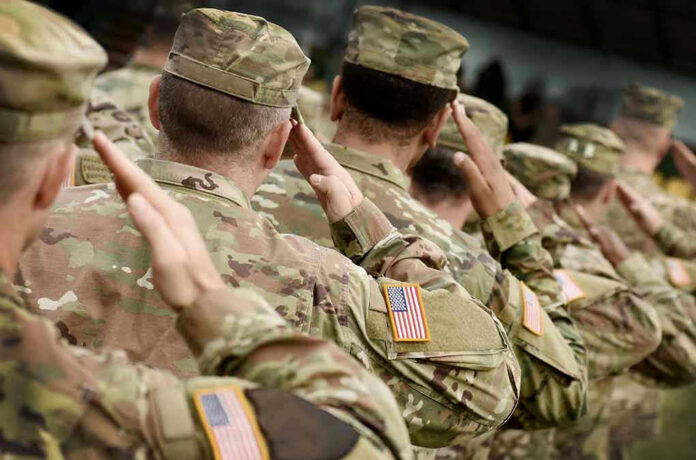
Coverage also notes that more than 3,000 airborne troops—elements of the 82nd Airborne Division—have already begun arriving, alongside about 5,000 Marines already positioned in the region. From a military planning perspective, airborne and Marine forces increase the range of contingency options because they are structured for rapid response and expeditionary missions. That does not prove an invasion is planned, but it does mean the force package is not purely symbolic.
Three carriers and a Hormuz-centered posture raise the stakes
The broader naval posture described in the reporting includes three aircraft carriers positioned across the region once movements are complete: the USS Abraham Lincoln, the USS Gerald R. Ford, and the USS George H.W. Bush. With dozens of fighter jets each, carrier groups create persistent airpower and intelligence coverage, which can deter escalation—or accelerate it—depending on decisions made in Washington and Tehran. Even without shots fired, this is an expensive and consequential signal.
Domestic implications: strength abroad, accountability at home
For Americans exhausted by decades of foreign-policy whiplash, the key question is what “success” looks like and how it will be measured. The reporting emphasizes pressure on Iran to accept nuclear terms acceptable to the United States, backed by a major troop and naval buildup. Conservatives will appreciate clarity and deterrence after years of mixed signals, but skepticism remains warranted: large deployments can become open-ended commitments unless Congress and the administration define objectives, costs, and exit ramps.
US military turning back ships as tensions rise with Iran, thousands more troops sent to Mideast amid hopes for new peace talks
— WestCapCry WCC (@UXDRA55p) April 15, 2026
There are also limits in what the public can verify right now. Some specifics—exact destinations, timelines, and the final approved size of any additional deployment—vary by report and are not fully disclosed by officials. Still, the core facts align across multiple outlets: a surge is underway, elite units are arriving, and the administration is pairing negotiations with unmistakable military leverage. In a political era when many voters distrust “the deep state,” transparency will matter as much as deterrence.
Sources:
Ceasefire Day 8: U.S. Sending Thousands More Troops to Mideast, Per Reports
Iran war: Trump, Pentagon consider sending more troops to Middle East
Thousands of US Army paratroopers arrive in Middle East as buildup intensifies