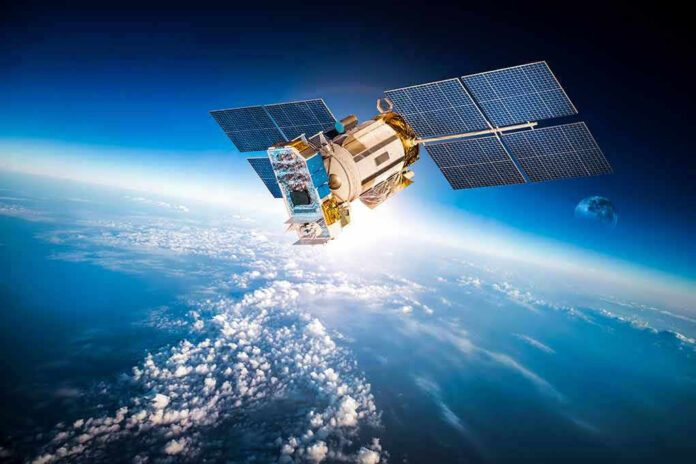
Elon Musk’s ambitious Starlink project faces scrutiny as satellites reportedly fall from the sky daily, prompting concerns about space safety and environmental impacts.
Story Highlights
- Starlink satellites experience frequent deorbiting, sparking safety and environmental concerns.
- SpaceX’s rapid satellite deployment causes increased space traffic and collision risks.
- Astronomers and environmentalists raise alarms over potential impacts on research and climate.
- Calls for improved regulation and international cooperation in space management grow louder.
Frequent Satellite Deorbiting Raises Concerns
As of October 2025, reports indicate a significant increase in the rate at which SpaceX’s Starlink satellites are deorbiting, with some sources claiming they are “falling every day.” This phenomenon is attributed to natural orbital decay, heightened solar activity, and the sheer number of satellites in the constellation. SpaceX has not provided detailed statistics on the deorbiting rate, but independent trackers confirm the presence of over 8,000 active satellites as of August 2025.
This increase in deorbiting events has raised alarms among astronomers, space safety experts, and environmental scientists. The constant reentry of satellites poses potential risks to space traffic management and could interfere with astronomical research. Moreover, the burning of satellite materials in the atmosphere might have unforeseen climatic effects, adding to existing environmental concerns.
Implications for Space Sustainability
The rapid deployment of Starlink satellites has resulted in increased space traffic and collision risks. The situation underscores the need for robust space traffic management and international regulations to prevent orbital congestion and potential collisions. The possibility of the Kessler Syndrome, where cascading collisions render low Earth orbit unusable, remains a significant concern.
Astronomers have expressed worries about light pollution and radio interference hindering ground-based observations. This persistent issue has led to calls for design changes in satellite technology to mitigate these impacts. Meanwhile, environmental scientists continue to study the atmospheric effects of the frequent satellite reentries.
Calls for Enhanced Regulation
As the Starlink constellation continues to grow, the need for updated regulatory frameworks and international cooperation becomes increasingly apparent. The current regulatory environment struggles to keep pace with the private sector’s rapid advancements in space technology. Regulators worldwide face the challenge of balancing innovation with the protection of shared orbital and atmospheric resources.
Musk's Satellites Now Constantly Falling Out of Sky…https://t.co/aTIm3EnGjI
— LukeSlyTalker (@Terence57084100) October 9, 2025
SpaceX’s efforts to address some concerns, such as adding sun visors to satellites to reduce brightness, highlight the company’s willingness to collaborate with astronomers. However, the broader issues of orbital sustainability and environmental impact require continued dialogue among all stakeholders to ensure a balanced approach to space exploration and utilization.
Sources:
SpaceX Starlink Satellites – Space.com
Elon Musk’s Starlink Satellites Are Falling Every Day – Peq42