
As 35 Union Pacific train cars derailed near a Texas town, Americans are left questioning whether our nation’s critical infrastructure is truly protected—or if regulatory failures and misplaced priorities have put communities at risk again.
Story Highlights
- Thirty-five Union Pacific freight cars derailed near Gordon, Texas, raising serious concerns about rail safety and hazardous materials.
- No injuries or hazardous leaks reported, but emergency crews treated the incident as a HazMat situation and contained a grass fire at the scene.
- The derailment occurred on a bridge in a rural area, disrupting rail traffic and spotlighting vulnerabilities in national infrastructure.
- This incident follows a string of rail accidents in recent years, fueling debate over regulatory oversight and emergency preparedness.
Major Rail Derailment Stirs Safety and Oversight Fears
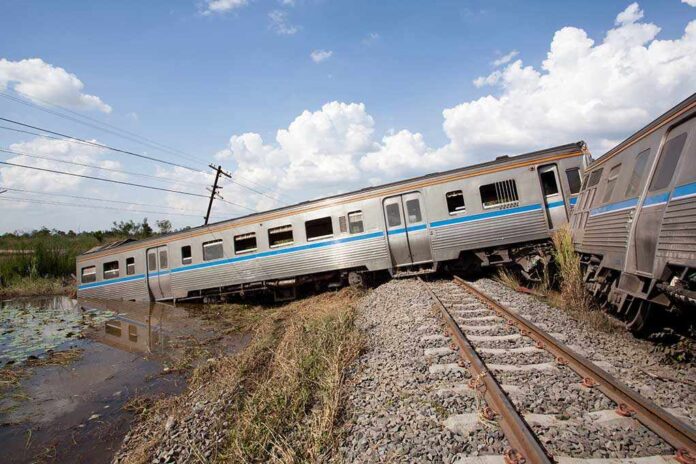
On August 12, 2025, a Union Pacific freight train derailed approximately two miles east of Gordon, Texas, with 35 cars leaving the tracks on a bridge over Coalville Road. Emergency response teams quickly arrived, containing a grass fire sparked by the wreck. While no injuries or hazardous material leaks were reported, officials treated the scene as a hazardous materials situation, highlighting the potential dangers that these massive trains can pose to rural communities—especially when carrying unknown cargo.
The absence of injuries and immediate environmental damage is a relief for local families, but the scale of the derailment and the need for HazMat protocols underscore deeper national concerns. Texas, a vital corridor for freight, has experienced several train accidents in the past decade. However, incidents of this magnitude remain relatively rare, making the situation in Gordon a stark reminder of infrastructure vulnerabilities and the risks associated with transporting hazardous goods through small towns. The cause of the derailment remains under active investigation, and no evacuations were ordered, but the event has reignited debate about whether current safety standards and government oversight are sufficient to protect the public.
Union Pacific and Local Authorities Face Scrutiny Over Response and Transparency
Union Pacific, as the operator of the derailed train, is now responsible for cleanup, investigation, and mitigation. Local emergency services in Palo Pinto County coordinated fire containment and HazMat assessment while ensuring public safety. The Federal Railroad Administration is expected to be involved in the official investigation. While officials reported no hazardous leaks and confirmed the site was secured, questions remain about the specific contents of the derailed cars and the speed of public communication. The event tested the readiness of local agencies and the transparency of corporate and government responses—areas where past incidents have revealed troubling gaps.
Despite the rapid response, local residents and business owners face short-term disruptions and long-term anxiety. Rail traffic is halted as cleanup continues, and concerns linger about the possibility of undetected environmental impacts. In rural communities, where resources are limited and families rely on the reliability of freight lines for economic stability, these events can have lasting consequences. The incident also puts a spotlight on the relationship between federal regulators, large rail operators, and the people most affected by their decisions, fueling calls for greater accountability and investment in infrastructure maintenance.
Broader Implications: Infrastructure, Regulation, and Conservative Concerns
This derailment did not result in casualties or confirmed contamination, but it adds fuel to a larger national debate. Recent years have seen a series of high-profile rail accidents, many involving hazardous materials. Industry experts argue that while rail transportation is generally safer than other modes, the potential consequences of a single incident can be catastrophic. Calls for stricter regulations, enhanced track monitoring, and robust emergency response protocols have grown louder, especially as rural communities bear the brunt of these risks. Critics argue that government overreach and mismanagement have diverted attention from core responsibilities, such as protecting infrastructure and American families, in favor of politicized agendas that do little to prevent real threats.
35 Union Pacific train cars derail near Texas town, no injuries reported https://t.co/aSG7uGhqoH
— Troy Record (@troyrecord) August 13, 2025
Conservative voices are demanding a renewed focus on securing the nation’s supply chains and holding both government agencies and private corporations accountable. The Gordon derailment is a clear warning: when oversight falters and priorities drift from American safety, it is local communities—patriotic, hard-working, and often overlooked—that pay the price. With investigations ongoing and regulatory scrutiny likely to intensify, many are watching closely to see if lessons will be learned, or if this will become yet another example of bureaucratic failure endangering the values and security Americans hold dear.
Sources:
Fox News: Smoke pours from train derailment in Palo Pinto County, Texas
ABC News: Train carrying possible hazardous materials derails in Palo Pinto County, Texas