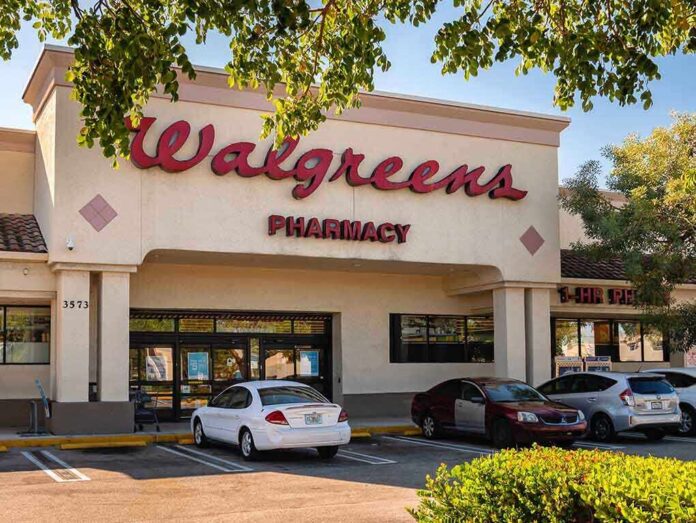
Walgreens’ massive $6 billion healthcare gamble has collapsed spectacularly, leaving hundreds of primary care clinics scrambling for buyers after private equity giant Sycamore Partners took control and abandoned the failed strategy.
Story Snapshot
- VillageMD seeks buyers for over 460 clinics nationwide after Walgreens exits primary care
- Sycamore Partners acquisition triggers complete abandonment of $6 billion healthcare investment
- Georgetown expert estimates VillageMD worth only $1 billion versus Walgreens’ $3.4 billion expectation
- Patients face care disruption as retail-based healthcare model proves unsustainable
Private Equity Dismantles Failed Healthcare Experiment
Sycamore Partners completed its $10 billion acquisition of Walgreens Boots Alliance in August 2025, immediately triggering VillageMD’s search for new ownership. The private equity firm’s takeover marks the definitive end of Walgreens’ disastrous primary care venture that began with optimistic pilot programs in Houston during 2019. VillageMD now operates as a standalone entity under Sycamore’s control, actively marketing over 130 Village Medical practices, 185 CityMD clinics, 130 Summit Health locations, and 20-plus Starling Physicians practices to potential buyers.
Billions Lost on Misguided Healthcare Diversification
Walgreens invested $5.2 billion in 2021 to become VillageMD’s majority owner, part of an aggressive plan to open 500-700 clinics over five years. The strategy aimed to transform Walgreens from a traditional pharmacy retailer into a comprehensive healthcare provider through value-based care models. However, slower-than-expected patient growth, underperforming clinics, and Medicare reimbursement changes undermined the business case, forcing Walgreens to report over $8 billion in net losses largely attributed to the VillageMD investment by 2024.
Market Reality Exposes Retail Healthcare Limitations
Georgetown University analyst Sandeep Dahiya estimates VillageMD’s actual market value at approximately $1 billion, far below Walgreens’ hoped-for $3.4 billion recovery. The valuation gap reflects fundamental challenges in scaling retail-based primary care profitably. Industry experts cite operational inefficiencies, inadequate patient volume, and the complexity of transitioning from fee-for-service to risk-based payment models as key factors in the strategy’s failure. Walgreens already closed 160 VillageMD clinics in March 2024, signaling the scope of the strategic miscalculation.
Patients and Communities Face Healthcare Access Uncertainty
The VillageMD divestiture creates immediate uncertainty for thousands of patients, particularly in underserved communities where these clinics provided convenient primary care access. Healthcare workers face potential job losses and career disruption as new owners may implement cost-cutting measures or close additional locations. The collapse also raises concerns about private equity’s growing influence in healthcare delivery, where profit maximization often conflicts with patient care continuity and community health needs.
This healthcare debacle demonstrates the risks of rapid corporate expansion without proper market validation, leaving patients to bear the consequences of executive overreach and financial mismanagement that prioritized growth over sustainable care delivery.
Sources:
Walgreens exploring options for VillageMD business, including selling entire stake
Walgreens move to go private: 4 key takeaways
WBA definitive agreement acquired by Sycamore Partners