
President Trump’s strategic pivot from ground troops to air support for Ukraine represents a fundamental shift toward making Europe shoulder primary responsibility for containing Russian aggression while America provides backup firepower.
Story Highlights
- Gen. Dan Caine met with European military chiefs to discuss Ukraine security guarantees following Trump’s air support proposal
- Trump rejected US ground troop deployment but offered potential air support for European peacekeeping forces
- European nations including France, Germany, and UK reportedly willing to deploy boots on the ground
- Putin agreed to meet Zelenskyy and consider Western security guarantees after Trump-Putin Alaska summit
Trump’s America First Military Strategy
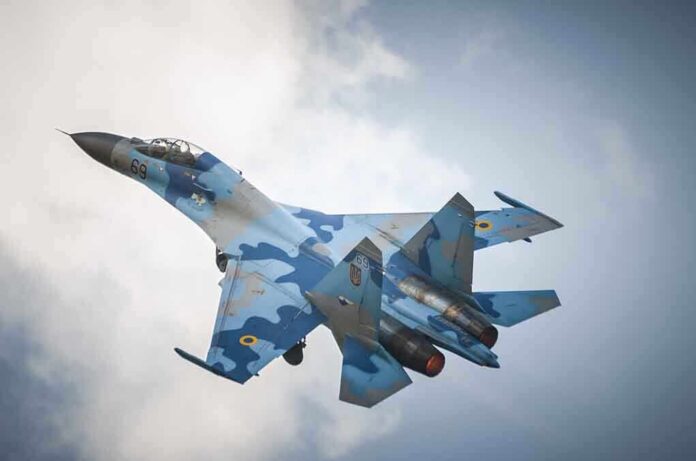
President Trump delivered on his campaign promise to reduce American military overextension by explicitly ruling out US ground troops in Ukraine while offering strategic air support. His statement that European allies “want to have boots on the ground” and America would help “especially, probably, if you talk about by air” reflects a calculated shift toward burden-sharing. This approach prioritizes American resources and lives while maintaining strategic influence through superior air power capabilities.
European Military Commitment Takes Center Stage
Gen. Dan Caine hosted military leaders from Germany, the UK, France, Finland, and Italy in Washington to hammer out concrete security arrangements for Ukraine. The high-level meeting on August 19, 2025, followed Trump’s White House summit with Zelenskyy and European leaders, where the new framework emerged. European willingness to deploy ground forces represents their recognition that regional security requires regional investment, not perpetual American subsidization.
Putin’s Calculated Diplomatic Opening
Following Trump’s Alaska summit with Putin on August 16, 2025, the Russian leader agreed to meet with Zelenskyy and consider Western security guarantees for Ukraine. This represents a significant diplomatic breakthrough after years of Russian rejection of NATO involvement in Ukrainian security arrangements. However, details remain deliberately vague, reflecting Putin’s tactical approach to negotiations while testing Western resolve and unity.
Strategic Implications for Conservative Priorities
Trump’s approach addresses core conservative concerns about endless foreign entanglements while maintaining American military superiority through air power. The framework reduces direct American casualties and financial burden while ensuring Europe takes primary responsibility for regional threats. This model could establish precedent for future conflicts, where American air support backstops allied ground forces rather than replacing them with expensive US deployments.
The virtual NATO military chiefs meeting scheduled for August 20, 2025, will determine whether this new burden-sharing arrangement can produce enforceable security guarantees. Success depends on European willingness to commit substantial ground forces and Putin’s genuine acceptance of Western involvement in Ukrainian security, both of which remain uncertain despite recent diplomatic progress.
Sources:
Top officers hold Ukraine talks after Trump rules out US troops
Trump Administration Live Updates