President Trump bypassed a congressional stalemate to pay furloughed TSA agents through executive order, easing airport chaos while Democrats remain locked in a funding standoff that left thousands of workers struggling to cover rent and food.
Story Snapshot
- Trump signed executive order on March 27 to repurpose funds with “reasonable nexus” to TSA operations, enabling paychecks by March 30 after 40% of agents called out during shutdown
- DHS Secretary confirmed TSA workers would receive pay by Monday or Tuesday, ending financial strain that created security line nightmares at major airports during peak travel season
- Senate passed DHS funding bill covering TSA, FEMA, and Coast Guard, but House Republicans rejected it as inadequate, leaving broader department shutdown unresolved despite TSA relief
- Airport wait times began easing by March 29 as morale improved among 500+ absent agents, though officials still urged travelers to arrive two to three hours early
Executive Action Circumvents Congressional Gridlock
Trump signed the executive order on Friday, March 27, directing the Department of Homeland Security to identify and repurpose existing federal funds with a direct connection to TSA operations. DHS Secretary Mark Wayne Mullen announced the following day that paychecks would reach furloughed Transportation Security Administration employees as soon as Monday, March 30. The move came after the Senate approved a comprehensive DHS funding package late Friday night, only to see House Republicans dismiss the bill as a “joke” and refuse passage. This unilateral action mirrors Trump’s previous use of executive authority to reallocate funds, setting a precedent for bypassing legislative stalemates.
Airport Chaos Drove Urgent Relief Measures
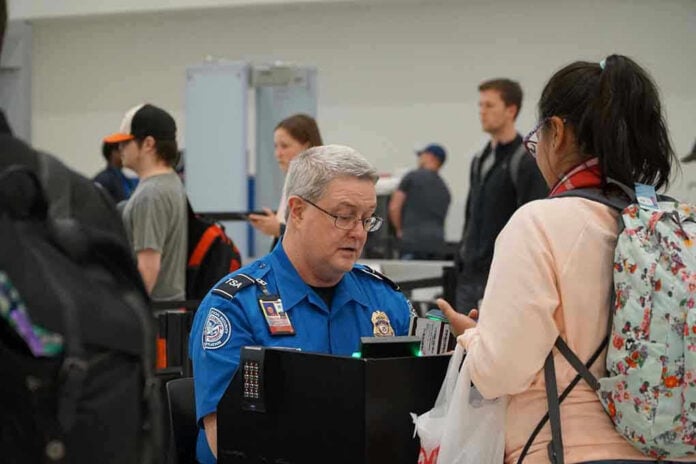
Prior to the executive order, approximately 40 percent of TSA agents—roughly 500 workers—called out from shifts at major airports nationwide, creating security line backlogs during a busy travel period. Furloughed employees faced mounting financial pressure, unable to pay rent or purchase groceries while working without compensation during the DHS shutdown. Secretary Mullen told reporters the agents were “struggling” and emphasized the urgency of restoring paychecks to stabilize airport operations. Travelers interviewed at terminals expressed relief that the workers’ families would receive income, hoping the measure would enable agents to return to duty and shorten wait times.
Partial Solution Leaves Broader DHS Funding Unresolved
While the executive order addresses immediate TSA payroll needs, the broader Department of Homeland Security shutdown persists, leaving FEMA and Coast Guard funding in limbo. Senate lawmakers worked through a late-night session on March 27 to pass a bill covering all three agencies, but House Republicans blocked the measure, arguing it failed to meet fiscal priorities or adequately address border security concerns. FOX 5 reporting on March 29 noted that airport conditions remained strained despite TSA relief, with officials advising passengers to arrive hours early as the department worked to rebuild staffing levels and restore normal security processing speeds.
Congressional Stalemate Reflects Deeper Budget Battles
The DHS funding impasse echoes the 2018-2019 government shutdown, when unpaid TSA workers similarly called out at high rates, causing widespread travel disruptions and thousands of missed baggage claims. This latest standoff stems from prolonged negotiations over fiscal year appropriations, with Democrats and Republicans unable to reconcile differences on spending levels and policy riders. Trump’s decision to repurpose funds without legislative approval bypasses the constitutional appropriations process, a strategy he previously employed for border wall construction. Critics argue this sets a dangerous precedent for executive overreach, while supporters view it as decisive problem-solving in the face of congressional dysfunction that harms hardworking Americans.
Travelers and Workers Await Full Operational Recovery
As of March 29, airports reported gradually improving conditions, with security wait times beginning to decline as word of imminent paychecks boosted TSA morale and reduced absenteeism. However, officials cautioned that full recovery would take days, urging travelers to maintain early arrival buffers of two to three hours for domestic flights. One traveler interviewed at an airport expressed optimism that agents could now “afford to come to work and support their families,” framing the executive action as essential for both national security infrastructure and individual livelihoods. The aviation sector anticipates stabilization in early April, though unresolved FEMA and Coast Guard funding raises concerns about federal disaster response capacity if the shutdown drags on.