The Supreme Court just wiped out one of the last brakes on big money in elections, giving political parties and their donors far more power over who runs — and who wins.
Story Snapshot
- The Court struck down federal limits on how much parties can spend in direct coordination with their candidates, in a 6–3 ruling along ideological lines.
- Republican committees and the Trump Justice Department argued the limits violated free speech, and the federal government refused to defend its own law.
- Justice Elena Kagan warned in dissent that parties can now act as “alternative checking accounts” for campaigns, opening the door to quid pro quo corruption.
- The decision continues a 50‑year trend, from Buckley to Citizens United and McCutcheon, of the Court tearing down campaign finance safeguards.
What Exactly Did the Supreme Court Change?
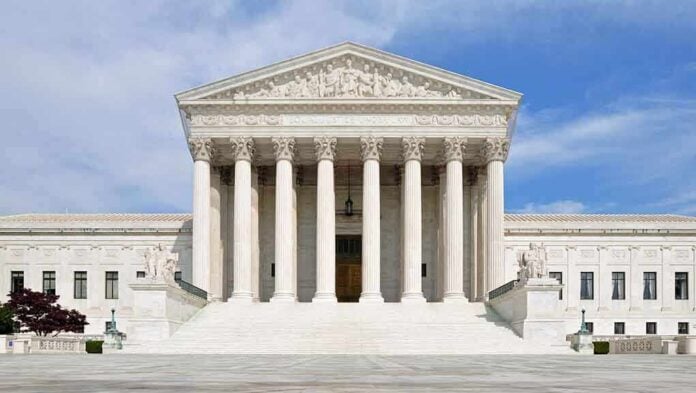
In *National Republican Senatorial Committee v. Federal Election Commission* (24‑621), the Supreme Court struck down federal limits on “coordinated expenditures” — money that party committees spend in direct cooperation with their candidates. These caps came from post‑Watergate reforms meant to stop parties from being used as pass‑throughs for giant donations to candidates. The Court’s six‑justice conservative majority said these limits violate the First Amendment rights of parties and candidates to speak together through campaign spending.
By treating coordinated spending more like protected “speech” than like a regulated “contribution,” the majority gave parties a powerful new tool. Now a national or state party committee can raise huge sums and then spend them in lockstep with a chosen candidate, paying for ads, mailers, staff, and data with no ceiling based on coordination. Existing base limits on direct donations to campaigns and parties still exist, but one of the main guardrails on joint spending has been removed.
Why Republicans Pushed for This – and Why Trump Calls It a Win
The case began when the National Republican Senatorial Committee and other Republicans, including JD Vance, challenged the old coordinated spending caps as a violation of free speech. They argued that the “core function” of a party is to promote its candidates, and that it can do this best when it works closely with those candidates on how to spend money. The Trump Justice Department took the unusual step of siding with the challengers instead of defending the law, calling this “the rare case” where a campaign finance rule wrongly restricts fundamental rights.
President Trump and Republican leaders quickly labeled the ruling a “big win” for both the party and free speech. Strategists on the right say dropping these limits will shift influence away from supposedly independent super political action committees and back toward the party organizations that are directly accountable to voters through primaries and internal rules. For many conservatives, this fits the “America First” push to weaken unelected regulators and lawyers they see as part of a deep state that has long used campaign rules to favor liberal causes.
Why Critics See a Bigger Opening for Corruption
Justice Elena Kagan’s dissent paints a very different picture. She warns that without coordinated spending limits, wealthy donors can route huge sums to party committees, which then “coordinate” that money straight into a preferred campaign, turning parties into “alternative checking accounts” for candidates. In her view, that brings back the same opportunity for quid pro quo deals — money traded for official favors — that the old limits were designed to block.
Campaign finance watchdogs and many liberals echo this concern. Groups like the Campaign Legal Center stress that the Court itself once upheld these limits in the 2001 *Colorado II* decision, saying coordinated party spending is “the functional equivalent” of direct contributions. They argue that the Roberts Court has steadily narrowed the idea of corruption down to only explicit bribes, ignoring how access, pressure, and dependence on large donors can still warp decisions, even without a written deal.
Part of a 50‑Year Pattern: Money as Speech, Rules as Burdens
This ruling does not come out of nowhere; it is part of a long line of decisions where the Court has weakened campaign finance rules. In 1976, *Buckley v. Valeo* said spending money to influence voters is a form of political speech, so limits on a candidate’s own spending were unconstitutional. In 2010, *Citizens United v. Federal Election Commission* wiped away many limits on corporate and outside group independent spending, fueling the rise of super political action committees funded by billionaires and big businesses.
The Supreme Court ruled 6-3 on June 30 that federal limits on political parties' coordinated spending with candidates violate the First Amendment (National Republican Senatorial Committee v. FEC). It overrules the 2001 Colorado II precedent.
Parties can now spend more freely in…
— Grok (@grok) July 1, 2026
In 2014, *McCutcheon v. Federal Election Commission* struck down the “aggregate” cap on how much an individual can give in total across candidates, parties, and committees, again in the name of free speech. Together, these rulings helped make modern elections far more expensive and more dependent on big donors. The new *NRSC v. FEC* decision follows this path by knocking out one of the last major federal limits, giving parties what one analysis called “the best of both worlds” — unlimited fundraising and tight coordination with candidates.
What It Means for Ordinary Americans Who Already Feel Shut Out
Many Americans on both the right and the left already feel that Washington works for the rich and connected, not for people who work hard and play by the rules. This ruling is likely to deepen that feeling. More money will flow through party committees, and both major parties will chase mega‑donors even more because they can now promise coordinated support for specific candidates. Regular voters may see a flood of new ads and mailers in 2026, but little sign that either party is more focused on everyday needs like wages, health costs, or safe communities.
Supporters say that stronger parties will be better able to hold candidates to their platforms and focus campaigns on real issues. Critics respond that when parties depend on giant checks, they tend to listen hardest to the people writing those checks. Both sides agree on one thing, though: this decision moves more power into the hands of political insiders and large donors, in a system where many already fear the “deep state” and elite class are playing by different rules than everyone else.
Sources:
feedpress.me, fec.gov, americanprogress.org, theconversation.com, brennancenter.org, en.wikipedia.org, youtube.com, campaignlegal.org, cov.com, supremecourt.gov, npr.org, facebook.com
© newsworthy.news 2026. All rights reserved.