
Marco Rubio just told America’s allies a hard truth about the Strait of Hormuz—and it raises a bigger question for Trump voters: why are U.S. forces still getting pulled toward another Middle East fight when America’s direct energy stake is limited?
Story Snapshot
- Secretary of State Marco Rubio says the U.S. gets “very little” energy through the Strait of Hormuz, while allies in Europe and Asia depend heavily on it.
- Iran has signaled it may change the “regime” of the Strait and has reportedly demanded large payments from ship operators to pass, testing norms of free navigation.
- Rubio is publicly pressuring allied nations to “step up” on securing the waterway, signaling the U.S. may participate without necessarily leading.
- The dispute is unfolding amid indirect U.S.-Iran contacts and an unresolved standoff over a U.S. proposal and Iran’s counter-conditions.
Rubio’s message: allies have more on the line than America does
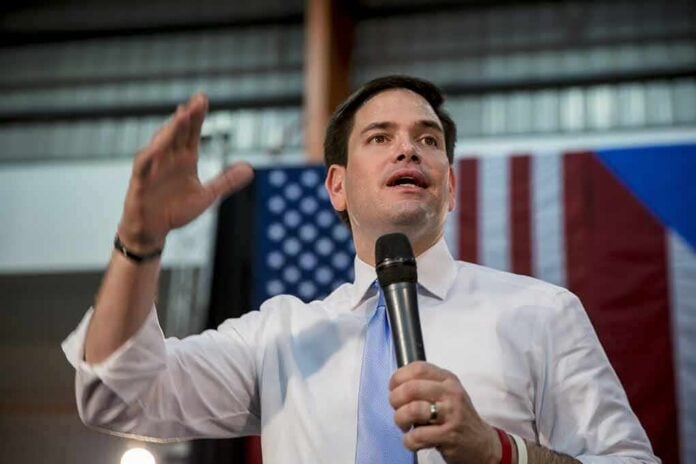
Secretary of State Marco Rubio has drawn a sharp line between U.S. interests and the interests of America’s partners when it comes to the Strait of Hormuz. Rubio’s public argument is straightforward: the U.S. has limited direct energy dependence on that shipping lane, while other nations rely on it far more. That framing matters because it reframes the “who pays, who patrols, who risks war” question at the center of today’s Iran-related tension.
Rubio’s remarks land at a politically delicate moment for the Trump coalition. Many conservative voters backed Trump to end “forever wars” and keep U.S. power focused at home, especially after years of inflation, border chaos, and spending fights. Rubio’s approach—burden-shifting to allies—reads like a direct response to that pressure. It also signals the administration is trying to deter Iranian leverage without automatically committing America to lead another open-ended mission.
Iran’s tolling push tests international navigation norms
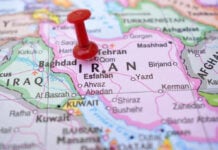
Iranian officials have signaled they intend to alter the status quo in the Strait, with reporting that Tehran has begun demanding major payments from shipping operators to transit. The research describes Iranian statements about changing how the Strait is governed and portrays the tolling concept as a war-costs justification. If accurate, that approach collides with the long-standing expectation of free passage through international waters, and it introduces a direct cost pressure on global energy and shipping.
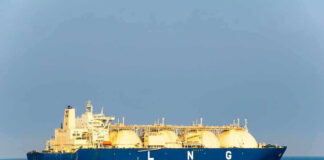
The Strait of Hormuz remains a strategic chokepoint for global energy flows, with research citing roughly one-fifth of worldwide energy supply transiting the corridor. That dependency is not evenly shared: major Asian consumers and parts of Europe have far greater exposure to disruptions than the U.S., according to the same reporting. The practical consequence is straightforward—when the route becomes unstable, prices and insurance costs can jump, and the economic pain shows up in high energy bills.
Diplomacy, demands, and a still-unclear off-ramp
Reporting cited in the research says the U.S. delivered a multi-point proposal to Iran covering major flashpoints, including nuclear issues, ballistic missiles, and maritime security, and that Iran rejected it with its own conditions. Those conditions reportedly include recognition of Iranian sovereignty over the Strait and reparations. The research also notes indirect contacts through intermediary countries and Rubio’s claim that energy flows have increased somewhat, but remain below normal.
Burden-sharing sounds right—until Americans are still holding the bag
Rubio has argued that nations that speak most loudly about international law should do more to defend it in practice. That logic fits a long-running conservative concern: American taxpayers and servicemembers too often shoulder disproportionate costs while wealthy partners hesitate. Yet the biggest test is execution, not messaging. If U.S. forces end up leading anyway, the administration risks deepening the same “endless intervention” frustration that has divided MAGA voters—especially when domestic priorities remain unresolved.
What to watch next for the Trump administration and skeptical voters
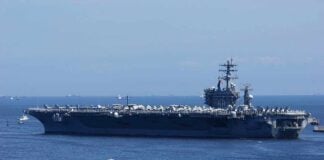
Rubio has described keeping the Strait open as an immediate post-conflict challenge while saying the U.S. does not have to lead a plan, even if it is willing to participate. That distinction will matter as allies decide whether they will commit ships, funding, or political capital—particularly after reports that some partners resisted earlier requests due to limited consultation. For American voters wary of regime-change logic, the key metric is whether burden-sharing becomes real policy or just rhetoric.
Limited public detail remains a constraint. The research describes uncertainty about how widespread any toll payments are and how backchannel diplomacy is progressing, with few specifics available. Until clearer facts emerge, conservatives who want constitutional, limited-government priorities at home will likely keep asking the same pointed question: if the U.S. truly has “very little” energy dependence here, what exact mission justifies any escalation—and what is the defined endpoint?