
A Manhattan hotel lobby turned into a political battleground when anti-ICE activists occupied the building, snarled operations, and forced NYPD to haul dozens away by bus.
Story Snapshot
- More than 100 protesters flooded the Hilton Garden Inn in Tribeca on Tuesday evening after claims the hotel was housing ICE personnel.
- NYPD issued dispersal warnings for over 45 minutes before arresting dozens; estimates ranged from at least 40 to about 50 people detained.
- Chants included anti-ICE slogans and targeted DHS Secretary Kristi Noem, reflecting escalating national tensions over immigration enforcement.
- Officials and reporters said it was not immediately clear whether ICE agents were actually staying at the hotel.
Hotel sit-in sparks arrests after prolonged dispersal warnings
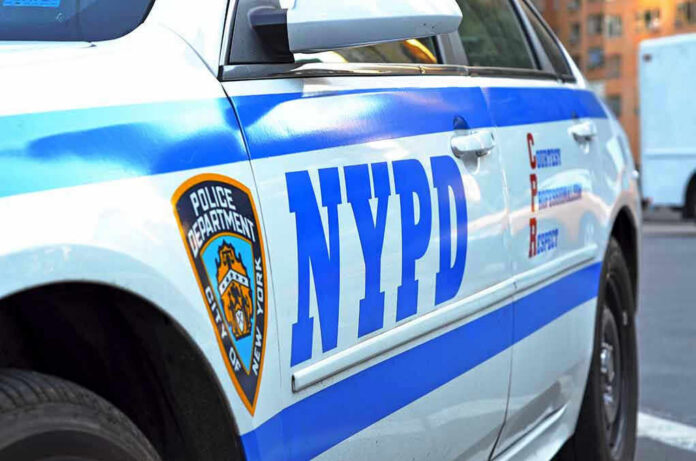
Protesters entered the Hilton Garden Inn in Tribeca around 6 p.m. Tuesday and occupied the lobby, chanting and holding signs while accusing the hotel of sheltering ICE agents. Reports described the crowd obstructing normal movement in and around the building, with a heavy police response later in the evening. After extended warnings to leave, NYPD began making arrests and loaded detainees onto a police bus around 8:20 p.m.
Accounts across outlets converged on the central facts: a large group assembled inside a private business, police attempted to clear the area for a significant period, and dozens ultimately were taken into custody. The exact arrest count was not confirmed in early reporting, and authorities had not publicly detailed charges by the time the initial stories ran. What was clear is that a protest framed as “speech” also included physical occupation and disruption.
What protesters said—and what remains unverified
Organizers and participants pushed a specific allegation: that the hotel was housing immigration agents. That claim helped trigger the sit-in, but reporting also stressed uncertainty about whether ICE personnel were actually present. Hotel staff and guests reportedly expressed confusion as the protest unfolded, a reminder that ideological activism often lands hardest on ordinary people trying to work, travel, or simply pass through a public-facing space without becoming collateral in a political spectacle.
The slogans captured on scene signaled how heated the anti-ICE movement has become. Demonstrators chanted “No ICE, No KKK, No Fascist USA” and “ICE out of New York,” and some messaging reportedly focused directly on DHS Secretary Kristi Noem. The rhetoric matters because it shows the protest was not only about a specific hotel, but about delegitimizing federal immigration enforcement itself—an enforcement mission rooted in laws passed by Congress and executed by the executive branch.
City Hall’s tightrope: praising protest while policing disruption
Mayor Zohran Mamdani’s office attempted to balance competing interests: public praise for protest activity paired with support for NYPD’s handling of the crowd. A spokesperson described the event as a “peaceful protest” and criticized ICE as “rogue,” language that aligns city leadership with activists even as police removed trespassers. That split-screen approach is politically useful in deep-blue cities, but it also underscores how sanctuary-style politics can strain cooperation with federal authorities.
NYPD’s actions followed a familiar pattern in major-city protest policing. Officers reportedly warned the crowd for more than 45 minutes before moving in, and many people left during that window while a smaller group remained and faced arrest. From a constitutional perspective, the key distinction is straightforward: the First Amendment protects speech and assembly, but it does not grant a blank check to occupy private property, obstruct operations, or refuse lawful dispersal orders indefinitely.
National backdrop: immigration enforcement clashes and protest escalation
The New York protest also drew energy from recent incidents in Minnesota involving fatal encounters with federal immigration personnel. Reporting cited two deaths this month—Renee Nicole Good (also referenced as Macklin Good) and Alex Jeffrey Pretti—in separate ICE or Border Patrol encounters. DHS asserted the individuals posed threats to agents, while critics pointed to video evidence and demanded scrutiny. Those disputes have become rallying points that activists use to justify direct-action tactics far from the original events.
Even with limited confirmed details, the direction of travel is visible: activists are pressuring private businesses—hotels in particular—over alleged cooperation with federal law enforcement. That trend raises practical questions for property owners and local communities about safety and access. When political movements treat routine lodging and commercial spaces as targets, the public loses normalcy first. Law-abiding travelers and employees should not be forced into ideological conflict simply to enter a lobby.
Limited information remained unresolved in early coverage, including definitive confirmation of ICE presence at the hotel, the final arrest tally, and specific charges. Still, the episode illustrates a broader clash: a federal government pursuing immigration enforcement and local political ecosystems that often sympathize with resistance tactics. For conservatives focused on rule of law and ordered liberty, the principle is consistent—protest is protected, but commandeering private spaces and impeding lawful operations is not.
Sources:
Dozens detained in New York after anti-ICE protest at Manhattan hotel