Joint US-Israel airstrikes are systematically dismantling Iran’s regime security apparatus in operations that some analysts believe could pave the way for an Iranian uprising, though evidence suggests the primary mission remains nuclear neutralization and military decapitation rather than direct revolt engineering.
Story Highlights
- Operation Roaring Lion and Epic Fury killed Supreme Leader Khamenei and targeted Iranian command centers, nuclear facilities, and security infrastructure starting February 28, 2026
- Trump publicly urged Iranians to “rise up” while CENTCOM focused on dismantling the regime’s military security apparatus through precision strikes
- The coordinated strikes mark an unprecedented shift from shadow warfare to overt regime-targeting operations, though no verified police-specific demolition campaign exists
- Iran retaliated with approximately 170 ballistic missiles hitting Israeli and Gulf targets, triggering escalating exchanges with Hezbollah forces
Trump Administration Launches Unprecedented Military Campaign
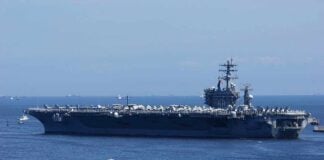
President Trump ordered Operation Epic Fury from Air Force One on February 27, 2026, coordinating with Israel’s Operation Roaring Lion to execute the most aggressive American military action against Iran in decades. CENTCOM forces deployed B-2 bombers, F-35 fighters, and Tomahawk cruise missiles beginning at 06:35 UTC on February 28, targeting Iranian nuclear facilities at Fordow and Natanz alongside command and control centers. The strikes killed Supreme Leader Ali Khamenei at his compound, creating a leadership vacuum in Tehran. Trump’s public statements shifted between justifying strikes as responses to imminent threats and urging regime change.
Strategic Targets Reveal Dual Military Objectives
Israeli and American forces concentrated firepower on Iran’s nuclear program infrastructure, missile production facilities, and regime security apparatus throughout early March 2026. The operations destroyed hardened bunkers housing enrichment centrifuges, demolished HQ-9B air defense systems protecting strategic sites, and obliterated missile storage depots across multiple Iranian provinces. CENTCOM explicitly stated its objective to “dismantle the Iranian regime’s security apparatus,” language that suggests broader goals than traditional counterproliferation missions. The unprecedented targeting of Tehran police stations and security command centers distinguishes these strikes from previous shadow war operations focused solely on nuclear and proxy force infrastructure.
Iranian Retaliation Tests Regional Stability
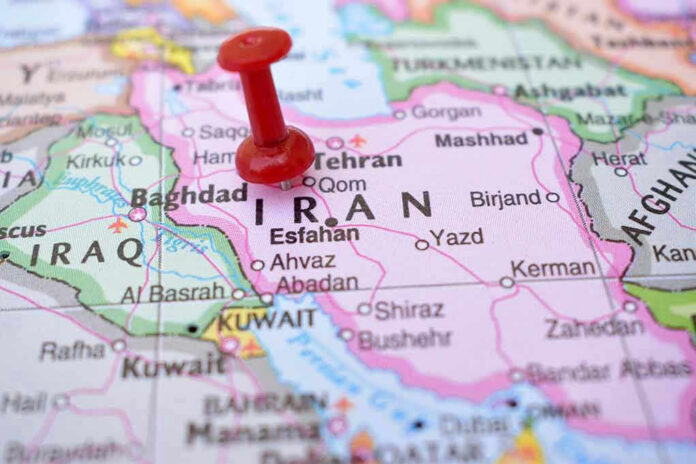
Iran launched Operation True Promise IV approximately three hours after initial strikes, firing roughly 170 ballistic missiles at Israeli population centers and American military installations in Bahrain and across the Gulf. The Islamic Revolutionary Guard Corps vowed continued retaliation despite suffering catastrophic leadership losses and degraded command capabilities. Hezbollah forces in Lebanon activated secondary fronts, launching rocket barrages into northern Israel that prompted the IDF to declare a state of war and execute retaliatory strikes against Hezbollah leadership in Beirut. The multi-front escalation represents the most dangerous phase of Iran-Israel conflict since the 1979 Islamic Revolution, with oil supply disruptions and broader regional war becoming increasingly likely outcomes.
Revolt Narrative Lacks Factual Foundation
No credible intelligence assessments confirm that US-Israel operations specifically targeted Iran’s police state infrastructure to facilitate popular uprising, despite sensationalized social media narratives suggesting this strategic intent. Trump’s public calls for Iranians to “rise up” coincided with military operations focused overwhelmingly on nuclear disablement and regime decapitation rather than systematic police force destruction. The strikes demolished military command centers and nuclear facilities using precision munitions, not broad-spectrum attacks against domestic security forces that would enable mass protests. While some analysts speculate that weakening regime security infrastructure could create opportunities for civil unrest, mainstream reporting emphasizes nuclear threat neutralization as the primary operational objective, consistent with decades of stated American policy goals toward Iran’s theocratic government.
Sources:
As Trump justifies Iran war, goals and timeline keep shifting – Times of Israel
Timeline of the 2026 Iran conflict – Wikipedia
Israel-Iran conflict – Britannica
2026 Iran conflict – Wikipedia
Iran-Israel war: A timeline of escalation – Times of India
What happened during the 2025 Israel-Iran war: A timeline – JTA
US and Israeli Strikes February 28, 2026 – Institute for the Study of War