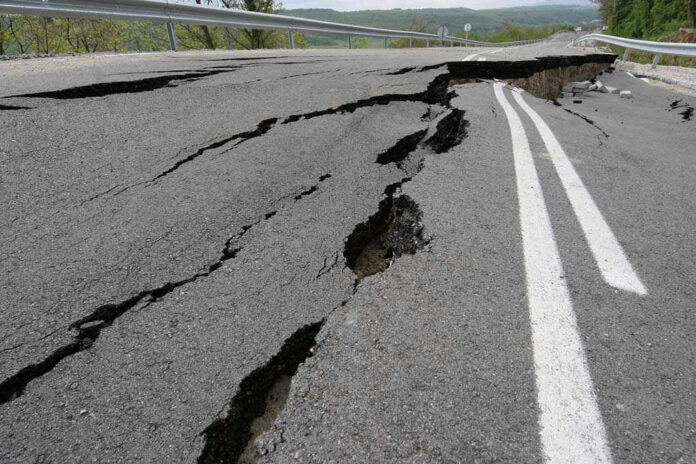
A single week of hard rain carved a four-kilometer crack through a Sicilian town—forcing over 1,500 people out and reigniting the uncomfortable question of why governments keep letting families live on known hazard zones.
Story Snapshot
- A major landslide hit Niscemi, Sicily after heavy rains linked to Cyclone (or Storm) Harry, pushing officials to evacuate roughly 1,000–1,500 residents.
- Drone and aerial footage showed homes, streets, and vehicles hanging above a steep drop as the ground continued shifting near the town’s historic center.
- Italy’s civil protection authorities set a “red zone,” expanded to a 150-meter no-go area, while schools and key roads were closed.
- National and regional leaders pledged emergency support as damage estimates rose sharply, with officials warning some residents may not be able to return.
What Happened in Niscemi—and Why the Ground Wouldn’t Stop Moving
Authorities in Niscemi, an inland town in southern Sicily, ordered large-scale evacuations after a landslide opened a long, shifting fracture along the edge of the community. Reports described a moving front stretching about four kilometers, with portions of the hillside collapsing toward the plain below. Officials linked the failure to days of intense rainfall associated with Cyclone Harry, which saturated the soil and accelerated instability first noticed earlier in the week.
Mayor Massimiliano Conti described the local situation as dire as the cliff face continued to crumble. Emergency teams focused on moving residents out quickly and establishing controlled zones as the terrain changed. Aerial imagery captured the kind of destruction that makes people stop and stare: sections of road swallowed, structures left precariously close to the edge, and vehicles positioned where pavement used to be stable. No deaths or injuries were reported in the initial coverage.
Emergency Response: Evacuations, Red Zones, and a Race Against Time
Italian civil protection authorities established a restricted “red zone” and later expanded the no-go area to 150 meters, aiming to keep families and responders away from ground that could give way without warning. Local reporting indicated that more than 300 families were displaced, with some sheltering in a sports arena and others relying on relatives. The closures extended beyond homes, affecting daily life through blocked roads and shuttered schools.
National-level involvement escalated as the situation worsened. On January 26, the federal government declared a state of emergency for southern regions and announced an initial €100 million allocation for immediate needs. By January 28, Premier Giorgia Meloni toured the area by helicopter and met local officials as monitoring continued. Civil protection leadership warned that ongoing movement could make some houses permanently uninhabitable, shifting the focus from temporary shelter to long-term relocation decisions.
The Bigger Problem: Building, Permits, and the Cost of Ignoring Geography
Geologists have long described this part of Sicily as vulnerable to hydrogeological risk, and the reporting emphasized Niscemi’s underlying layers of sand and clay—materials that can destabilize quickly when saturated. University of Catania professor Giovanna Pappalardo said the situation echoed past events, but with more significant characteristics, including the scale of the moving front and its direct impact on homes. The area also faced a similar crisis in 1997.
Regional President Renato Schifani put damage estimates as high as €2 billion as the broader storm impacts across Sicily came into view. Coverage also referenced renewed scrutiny of construction and permitting in risky areas, with Schifani acknowledging questions while urging focus on immediate response. Those tensions are familiar in disaster zones: families want answers, politicians want to avoid blame, and engineers want clear authority to prevent people from returning too soon.
What the Footage Shows—and the Lessons Americans Should Take from It
The most striking evidence came from above: videos showed buildings and cars near a sharp precipice, highlighting how quickly a “normal neighborhood” can become unlivable. Officials emphasized monitoring because the ground was still moving, and civil protection leaders floated permanent relocation as a realistic outcome. The evacuation numbers varied across reports—roughly 1,000 to 1,500—suggesting a fast-evolving situation rather than a neat, final tally.
For Americans watching from afar, the takeaway is practical, not partisan: government has a duty to protect life, but it also has a duty to level with citizens about risk and stop repeating predictable mistakes. When authorities permit dense housing on unstable ground, taxpayers often end up funding emergency housing, infrastructure rebuilds, and long-term displacement anyway. Niscemi’s landslide is a reminder that nature doesn’t negotiate—and public officials can’t “messaging” their way out of geology.
Sources:
Massive landslide sparks evacuation of 1,000 residents from Italian town
Huge landslide cleaves off edge of town in Sicily, forces evacuation of 1,500 people