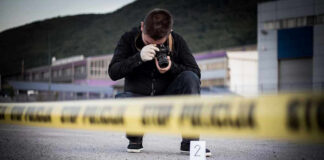
Even when America’s defenses work, Iran’s drone war still finds a way to terrorize civilians—this time by raining debris into a Christian neighborhood near a key U.S. hub in Iraq.
Quick Take
- Intercepted drones near Erbil International Airport broke apart and crashed into homes in Ankawa, damaging buildings, cars, and a church with no reported casualties.
- The incident highlights how drone and proxy warfare can spill into civilian areas even when air defenses succeed.
- Regional reporting ties the surge in attacks to escalating U.S.-Iran tensions after coordinated U.S.-Israeli actions against Iran.
- Iran-linked Iraqi militia factions publicly claimed responsibility for strikes in northern Iraq, but specifics about launch origin remain disputed across reports.
Debris Hits Homes as Defenses Stop Drones Near Erbil Airport
Residents in Ankawa, a suburb near Erbil International Airport in Iraq’s Kurdistan Region, reported shattered windows and structural damage after the remains of downed drones fell into residential areas. Local civil defense assessed the destruction, which included impacts to apartment buildings, vehicles, and a nearby church. Reporting indicated no injuries, but the psychological impact was immediate, with some residents describing fear and weighing whether to leave the area.
Security-focused reporting emphasized that this episode stands out because debris reached a populated neighborhood rather than landing harmlessly away from civilians. The airport area is strategically sensitive because it hosts critical infrastructure and sits near facilities linked to U.S. forces and the U.S. consulate footprint. Even without casualties, the practical takeaway is sobering: interception is not the same thing as safety when falling wreckage lands where families live.
Why Erbil Keeps Getting Targeted in the U.S.-Iran Proxy Fight
Erbil has long served as a major political and security hub in northern Iraq, and its airport has repeatedly appeared in reporting about drone and rocket threats tied to the wider U.S.-Iran standoff. Several outlets describe a pattern of attempted strikes and air-defense responses, including earlier incidents in which multiple drones were shot down above the area. The current escalation is framed as part of a broader tit-for-tat cycle reverberating across the region.
Multiple reports connect the latest wave of attacks to a period of heightened confrontation following Israeli-announced preemptive strikes on Tehran that were described as coordinated with the United States. After that, drone and missile retaliation narratives intensified, with some coverage pointing to Iranian involvement either directly or through allied Iraqi militias. The result for civilians in places like Ankawa is a new kind of uncertainty—where “front lines” blur into neighborhoods near airports and consulates.
Militia Claims, Conflicting Narratives, and What Can Be Verified
Iran-aligned militia messaging has played a major role in shaping the information environment around these attacks. Reporting cited claims from a group identified as Saraya Awliya al-Dam, also called “Guardians of Blood,” operating under the umbrella of the “Islamic Resistance in Iraq.” Those statements framed strikes on U.S.-linked sites in Erbil and locations near Baghdad as retaliation, including rhetoric tied to the reported death of Iran’s Supreme Leader—an element that other reporting treats cautiously.
The verifiable facts across sources are narrower than the propaganda: drones were engaged over Erbil, some were downed, and debris caused property damage in a civilian area with no reported casualties. Where accounts diverge is attribution and scale—how many drones were involved in specific events, and whether the launches were directly Iranian or executed by Iran-linked Iraqi factions. Readers should treat sweeping casualty-free “victory” claims and dramatic leadership-death justifications as assertions unless independently confirmed.
Civilian Risk, Strategic Pressure, and the Policy Stakes for Washington
The immediate impact in Ankawa was damage, fear, and the possibility of displacement—an especially sensitive outcome in a community described in reporting as a Christian-majority area. The incident also exposes a strategic dilemma for the United States: air defenses can protect bases and critical sites, yet repeated attacks still impose costs by disrupting local life, stressing host-region stability, and pressuring political relationships between the Kurdistan Regional Government, Baghdad, and Washington.
For Americans watching from home in 2026, the uncomfortable lesson is that deterrence and defense are inseparable from clear strategy. Drone warfare is cheap for adversaries and their proxies, while each attempted strike forces expensive responses and risks civilian fallout when debris falls. The reporting available does not resolve who fired every drone, but it does show a predictable pattern: proxy networks, regional escalation, and ordinary families paying the price when conflict moves closer to populated areas.
Sources:
https://english.news.cn/20260302/74c373ad9684454ca8438446f6ee1a35/c.html
https://www.kurdistan24.net/en/story/896852
https://www.iraqinews.com/iraq/erbil-airport-explosions-drone-retribution-march-2026/