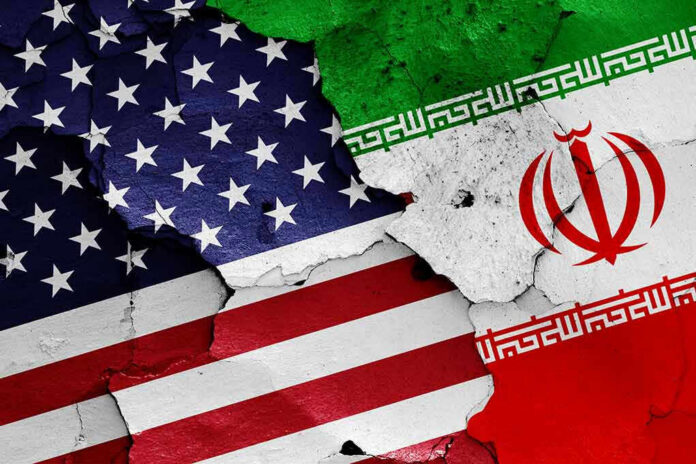
One social-media post from the Commander in Chief just jolted Americans back into the question they hoped was settled: is this administration drifting into another open-ended Middle East war?
Quick Take
- President Trump said Iran’s president requested a ceasefire, but Iranian officials quickly denied the claim.
- Trump tied any ceasefire consideration to the Strait of Hormuz being “open, free, and clear,” while warning strikes would continue if it is not.
- U.S.-Israeli “major combat operations” against Iran began Feb. 28, 2026, and remain ongoing with no confirmed ceasefire agreement.
- Energy markets and U.S. households face heightened uncertainty because Hormuz disruptions can intensify oil-price volatility.
Trump’s “Ceasefire” Claim Collides With Iran’s Denial
President Donald Trump posted April 1, 2026, that Iran’s “new regime president” had requested a ceasefire from the United States, framing it as a sign Tehran wants out. Within hours, Iranian officials publicly rejected the account as “false and baseless,” leaving Americans with competing narratives and no independent confirmation of direct outreach. The episode underscores a key reality: major war-and-peace signals are now arriving via rapid online statements, not formal diplomacy.
Trump also attached a concrete condition: the Strait of Hormuz must be “open, free, and clear” before any ceasefire is considered. That is not a side issue; it is the choke point for a large share of global oil shipments, and it is central to why this conflict is being felt in American wallets. For voters already angry about inflation and high energy costs, a prolonged Hormuz crisis risks turning foreign policy into a direct domestic cost.
From “Major Combat Operations” to Mixed Signals on an Exit
The administration’s Iran campaign escalated after Trump announced “major combat operations” beginning Feb. 28, 2026, described in reporting as massive U.S.-Israeli strikes on Iranian military and government sites. Since then, the public posture has mixed escalation with off-ramps: Trump has talked about ceasefire discussions in late March, and he has also signaled the U.S. could be leaving the conflict within “two to three weeks,” with or without a deal.
Those mixed messages matter politically because Trump’s coalition includes voters who supported him expecting fewer foreign entanglements, not another cycle of open-ended bombing followed by unclear end states. The reporting available does not confirm a negotiated framework, a timetable, or enforcement terms, and that uncertainty is the point: without transparent, verifiable commitments, ceasefire talk can become a headline that masks continued operations. Limited public detail also makes oversight and accountability harder.
Hormuz, Energy Prices, and Why This Hits Home
Trump’s Hormuz demand places global energy stability at the center of the negotiations. Analysts cited in coverage warn that disruptions there can whip markets and amplify oil shocks, with ripple effects from gasoline to shipping to food prices. Even if Americans agree Iran should not threaten international waterways, the practical question is whether the U.S. is being drawn into a mission that requires persistent force to “keep it open,” potentially expanding objectives and increasing the risk of a long commitment.
The Iran Power Structure Problem: Who Can Deliver a Deal?
Reporting also highlights a structural obstacle: Iran’s elected president, Masoud Pezeshkian, is widely described as having limited power compared with other centers of authority in the regime. That undercuts the certainty of Trump’s claim that the “new regime president” is the key interlocutor, and it raises a basic due-diligence issue for any ceasefire message. If the person allegedly requesting terms cannot bind the real decision-makers, then ceasefire headlines may not translate into lasting compliance.
Where This Leaves MAGA Voters and Constitutional Conservatives
For conservative voters, the strongest facts on the table are straightforward: the U.S. is conducting major strikes alongside Israel, the president is communicating war aims and timelines through social media and brief remarks, and Iran disputes key claims publicly. That combination is fueling division inside the MAGA base—between those who see Israel’s fight as inseparable from U.S. security and those who see another regime-change-adjacent conflict taking shape. The available reporting does not establish a verified ceasefire request, so the public should treat it as unconfirmed until formal channels produce terms.
Americans who care about constitutional government should also watch process as closely as outcomes. War policy made primarily through online posts can bypass clarity, congressional debate, and public proof—especially when the opposing side denies the underlying claims. If the administration is serious about ending the fighting quickly, the next test is whether it can produce verifiable benchmarks: what “open” Hormuz means operationally, what stops the strikes, and what prevents a temporary pause from becoming another forever conflict.
Sources:
Iran live updates: Trump says ‘ceasefire’ requested
Iran live updates: Trump threatens infrastructure strikes if talks fail