
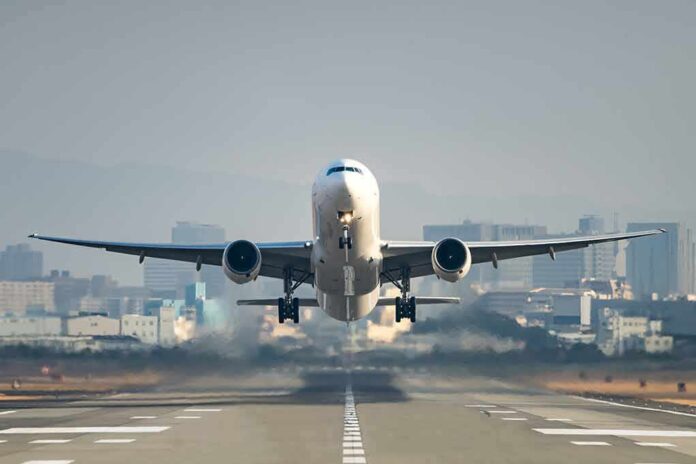
A Boeing 787 Dreamliner sliced through the tail of a parked Airbus A321 at Hanoi’s Noi Bai Airport, adding to a year already marked as one of the deadliest for air travel in the past decade.
Key Takeaways
- Vietnam Airlines suspended all four pilots involved after a Boeing 787-9 Dreamliner’s wing collided with an Airbus A321’s tail at Hanoi Airport
- No injuries were reported among the 386 passengers on both aircraft, though both planes sustained significant damage
- Preliminary findings suggest the Airbus A321 was not properly positioned on taxiway S3, contributing to the collision
- The incident has been classified as Level B, the second highest on a five-tier safety breach scale, and is being investigated by the Civil Aviation Authority of Vietnam
- 2025 is tracking as one of the deadliest years for commercial aviation in the past decade
Drama on the Tarmac
Two Vietnam Airlines aircraft collided at Hanoi’s Noi Bai International Airport on Friday afternoon, creating a dramatic scene when a Boeing 787-9 Dreamliner’s right wingtip struck the vertical stabilizer of a parked Airbus A321. The incident occurred around 2 p.m. local time as the Boeing was taxiing toward the runway for departure. Video footage captured by passengers shows the moment of impact, with the larger aircraft’s wing slicing through the tail section of the smaller plane, causing visible and significant damage to both aircraft.
Airport authorities immediately suspended operations in the affected area to clear debris from the runway while aviation officials launched an investigation. Both aircraft were grounded for inspection following the incident, and the airlines worked quickly to accommodate affected passengers on alternative flights. The collision disrupted airport operations temporarily but did not lead to extended closures or significant delays to other scheduled flights.
Pilots Suspended as Investigation Unfolds
In response to the incident, Vietnam Airlines took swift action by suspending all four pilots involved – two from each aircraft. “Vietnam Airlines has suspended the four pilots, two from each flight crew, from Friday afternoon pending the results of an internal investigation,” Vietnam Airlines announced in a statement.
“Vietnam Airlines said it is fully cooperating with aviation authorities to determine accountability and prevent similar incidents in the future,” Vietnam Airlines stated in their official announcement.
The Civil Aviation Authority of Vietnam (CAAV) has classified the incident as a Level B occurrence – the second highest category on their five-tier scale for aviation safety breaches. This classification underscores the severity of the incident while triggering comprehensive investigative protocols. Independent investigators are working alongside airline personnel to review cockpit voice recorders, flight data, and air traffic control communications from the moments leading up to the collision.
Preliminary Findings Point to Improper Parking
Initial reports from aviation authorities suggest that improper positioning of the Airbus A321 on taxiway S3 may have been a contributing factor in the collision. “Two Vietnam Airlines collided after a Boeing aircraft cut too close to an Airbus, slicing its tail on the airport tarmac,” VN Express reported in their coverage of the incident.
The collision comes at a troubling time for the aviation industry. According to aviation safety experts, 2025 is already tracking to be one of the deadliest years for air travel in the past decade, with fatality figures nearly double the average annual numbers. While this incident fortunately resulted in no injuries among the 386 passengers aboard both aircraft, it raises serious questions about operational procedures at busy international hubs where dozens of aircraft must navigate limited space.
Broader Aviation Safety Concerns
This collision adds to growing concerns about aviation safety standards worldwide. The incident stands out as particularly concerning because ground collisions at major airports typically involve strict procedural safeguards to prevent exactly this type of accident. Aviation experts note that while the industry maintains high overall safety standards, a series of recent incidents globally suggests potential systemic issues that may require regulatory attention.
Vietnam Airlines has not publicly commented on the financial implications of the collision, but aviation analysts estimate the damage to both aircraft will cost millions to repair. The Boeing 787-9 Dreamliner involved is among the newest and most expensive aircraft in the Vietnam Airlines fleet, while the Airbus A321 sustained damage to critical flight control surfaces that will require extensive repairs before either can return to service.