
newsworthy.news — Cuban state messaging is stoking “imminent invasion” fears, but no confirmed U.S. war plan has been announced—raising questions about propaganda, deterrence, and how America should apply pressure without inviting another Bay of Pigs moment.
Story Snapshot
- Cuban authorities urged civilians to prepare for a hypothetical U.S. attack and circulated a civil-defense family guide [1].
- Coverage shows militia-style training and rhetoric built around “war of the entire population” in Cuba [1].
- Reporting notes the Trump administration has not said it is planning military operations in Cuba [1].
- Cuban officials and allied media warn of a “bloodbath” if the United States invades [4].
Cuban Mobilization Messaging And Civil-Defense Guidance
Cuban coverage amplified warnings that civilians should brace for an “imminent” United States attack, with the country’s Civil Defense agency distributing a family guide on how to respond to a hypothetical military aggression, according to reporting sourced to a Cable News Network dispatch from Havana and republished by a South Florida outlet [1]. Cuban state media simultaneously showcased militia-style preparation rooted in Fidel Castro’s “war of the entire population” concept, signaling Havana’s effort to harden public resolve and frame the crisis on its terms [1].
Such messaging fits a familiar pattern from past Cuba flare-ups, where official Cuban alerts, images of civilian drills, and charged headlines shape global perception long before any concrete military timetable emerges. The same reporting cycle stresses fear and urgency, portraying the island as under siege and rallying domestic audiences, while also seeking to discourage Washington from escalating. The current wave mirrors Cold War-era crisis communication, substituting modern civil-defense pamphlets and televised training for earlier revolutionary broadcasts [1].
What Washington Has (And Has Not) Said Publicly
Despite the intensifying rhetoric, the same dispatch relaying Havana’s alarms states clearly that the Trump administration has not said it is planning military operations in Cuba [1]. That single sentence anchors the known public record: accusations and warnings are loud; official confirmation of invasion plans is absent. In this information climate, disciplined policy signals matter. Clear statements deter adversaries and reassure allies, while careless leaks or showy speculation can trigger miscalculation neither side wants.
Independent coverage has also highlighted Cuban officials and sympathetic outlets forecasting catastrophic consequences should the United States attack, with one widely quoted warning predicting a “bloodbath” if an invasion occurs [4]. Those statements serve two purposes: they attempt to raise the perceived costs for Washington and they aim to galvanize international opinion against American action. They do not, however, verify that an invasion order exists or is imminent. They function as deterrent rhetoric, not proof of U.S. intent [4].
How Conservatives Should Read The Signals
Conservative readers should separate propaganda from prudence: military contingency planning is normal, secrecy around options is standard, and deterrent pressure can save lives when used wisely. The record shows Cuban authorities amplifying invasion talk and preparing the population, while U.S. officials have not publicly confirmed war plans [1]. That leaves space for strong, lawful pressure—sanctions, interdictions against espionage platforms, and diplomatic isolation of Havana’s security apparatus—without rushing into an open-ended occupation that history warns against [1].
🇺🇸🇨🇺Cuba Invasion Warning: Don’t Repeat the Vietnam Disaster:
The Pentagon has plans and forces ready for military strikes on Cuba – only President Trump’s order is needed.
However, I’m highly skeptical an invasion will happen. Cuba’s dense jungles, rugged mountains, and… pic.twitter.com/bM9yZwwj8q
— WORLD AT WAR (@World_At_War_6) May 28, 2026
American strength is not measured only by troop movements; it is measured by clarity of purpose, limited government, and fidelity to the Constitution. Congress must assert oversight, demand briefings, and ensure any use of force aligns with statutory authority. The administration can tighten enforcement against regime-linked revenue streams while protecting Cuban dissidents and American communities in South Florida. Stand firm against communist repression and foreign meddling in our hemisphere—while refusing to be maneuvered by Havana’s narratives into a fight on the regime’s terms [1][4].
Sources:
[1] Web – Inside secret plan for Cuba invasion with armada, 2,500 marines, …
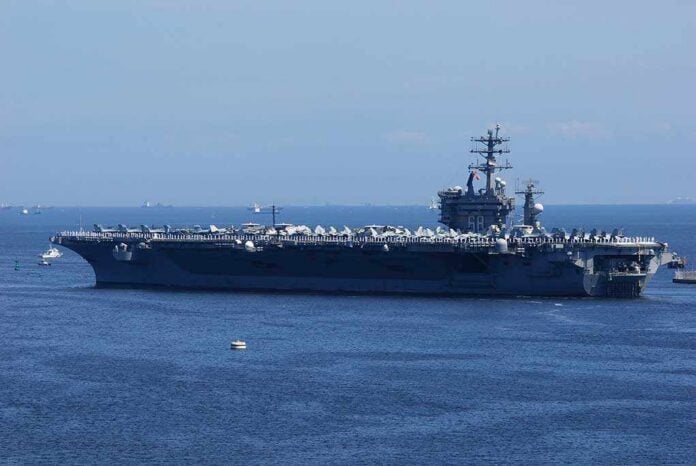
[4] YouTube – Trump Cuba Invasion On Cards? USS Nimitz On Standby …
© newsworthy.news 2026. All rights reserved.