
A routine trip to renew a commercial driver’s license turned into a street-level scramble when ICE moved in—prompted not by a government database, but by ordinary citizens making calls.
Story Snapshot
- ICE arrested 13 illegal immigrants at the West Kittanning Driver’s Licensing Center in Armstrong County, Pennsylvania, after multiple public tips reported an unusually large group seeking CDLs.
- Witnesses described people fleeing on foot, abandoning vehicles—including tractor-trailers—and running through nearby yards as agents and local police arrived.
- DHS/ICE said the arrestees were from Uzbekistan, Kyrgyzstan, and Turkmenistan; one person also faces resisting-arrest and assault-related charges.
- The county sheriff supported immigration enforcement but criticized operational planning, while PennDOT said it did not coordinate with ICE and defended its verification process.
Citizen Tips Trigger ICE Action at Rural Pennsylvania Licensing Site
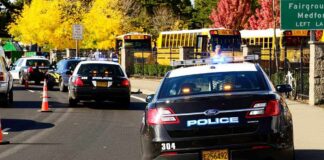
East Franklin Township Police and federal agents converged on the West Kittanning Driver’s Licensing Center on Friday, April 4, after locals reported what they viewed as an abnormal scene: a large group of non-English-speaking foreign nationals, many tied to tractor-trailers, lining up for Commercial Driver’s License business. Witnesses Zach Scherer and Gary Klingensmith described placing calls to authorities as the line grew, and Scherer recorded video from the scene.
DHS/ICE later confirmed 13 arrests. Reports described a chaotic reaction when law enforcement arrived, with people scattering, leaving vehicles in the street, and running through yards and over fences. The operational details matter because the initial trigger was not a planned agency sweep announced in advance; it was a rapid response built around public reporting, on a day when the licensing center was busy.
Who Was Arrested—and Why the CDL Angle Matters
ICE said the detainees were citizens of Uzbekistan, Kyrgyzstan, and Turkmenistan. The immediate controversy is less about nationality than about access to CDLs, which can place drivers behind the wheel of heavy commercial vehicles operating across state lines. For many Americans—especially after years of border dysfunction—CDL eligibility has become a litmus test for whether government systems are prioritizing safety and lawful presence over convenience and volume.
The incident also highlights a practical reality in immigration enforcement: a large crowd can overwhelm a small number of agents, even when local law enforcement is present. Armstrong County Sheriff Frank Pitzer backed the enforcement effort but publicly urged “better planning” for scenarios involving large gatherings. That criticism does not negate the arrests; it underscores how quickly a targeted operation can become a public-safety and traffic-control problem when people run and vehicles are left behind.
PennDOT Denies Coordination as Questions Shift to Verification Systems
PennDOT distanced itself from the enforcement action, saying it did not coordinate with ICE and characterizing the crowd as connected to routine administrative issues, including medical form updates for certain non-domiciled permit holders. PennDOT also emphasized that it issues licenses to “lawfully present individuals” and uses federal SAVE verification. Those statements may reassure residents who want clean licensing files, but they also reveal the trust gap: witnesses said the crowd looked highly unusual, while the state described it as explainable.
What This Episode Signals About Enforcement, Trust, and “Deep State” Frustration
Politically, the Kittanning arrests land in the middle of a broader argument about whether government institutions enforce laws consistently or selectively. Conservatives who believe prior administrations tolerated illegal immigration will view the arrests as overdue accountability, especially in a sector as consequential as trucking. Many liberals, meanwhile, worry that aggressive interior enforcement sweeps up people without adequate due process. The limited, verified facts here show a narrow enforcement outcome—13 arrests—paired with a much larger crowd, suggesting many left before identification.
The bigger takeaway is institutional confidence. When public tips drive an action that state agencies say they neither planned nor coordinated, it feeds a perception shared across the spectrum: ordinary citizens and local officials are often left to react in real time while federal and state bureaucracies pass responsibility back and forth. With one arrestee facing additional charges tied to resisting and assault allegations, the episode also shows how quickly routine public services can become flashpoints when enforcement intersects with high-stakes licensing.