
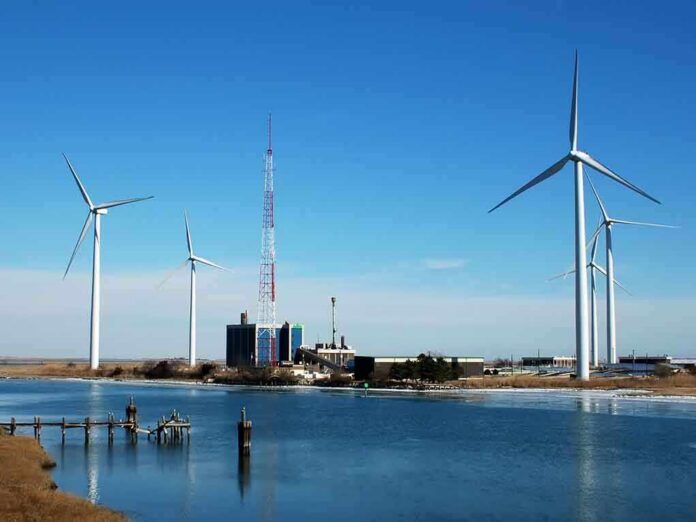
Over half a million balsa trees are illegally stripped from the Amazon rainforest annually to satisfy the global wind turbine industry’s insatiable appetite, exposing the devastating environmental hypocrisy behind the left’s cherished “green energy” agenda.
Story Snapshot
- Approximately 523,810 balsa trees are illegally logged each year from virgin Amazon forests to meet wind turbine blade demand
- The Environmental Investigation Agency found exporters blend 10-70% illegal wood into supply chains, with up to 50% of total production sourced illegally
- Indigenous Achuar and Waorani communities face ecosystem destruction and social devastation including drugs, prostitution, and cultural displacement
- Protected areas like Yasuní National Park are being systematically invaded by loggers despite weak government enforcement
Green Energy’s Hidden Environmental Cost
Ecuador exports between 50,000 and 80,000 tonnes of balsa wood annually, with approximately 55% destined for wind turbine blade manufacturing. Each three-blade turbine set requires 10.5 cubic meters of balsa wood, translating to roughly 40 trees per installation. The Environmental Investigation Agency documented in October 2024 that exporters openly admit sourcing from “north to south” across Amazon provinces, targeting massive trees in protected Yasuní National Park despite criminal penalties. This systematic exploitation reveals how the wind industry’s sustainability claims crumble under scrutiny when traced back to their supply chains.
Chris Morrison: EXCLUSIVE: Half a Million Balsa Trees Illegally Logged in Amazon Rainforest Every Year to Feed Global Wind Turbine Demand https://t.co/28WpD9iv7M
— Climate Realists🌞 (@ClimateRealists) March 17, 2026
Plantations to Virgin Forests: A Destructive Shift
Balsa harvesting operated sustainably through managed plantations until 2018-2020, when surging global wind capacity growth depleted legitimate supplies. Production spiked from 33,000 tonnes in 2020 to 75,000 tonnes as Chinese turbine manufacturers expanded operations from $8-12 billion in 2021 to $16 billion by 2024. Unable to meet demand through legal channels, loggers invaded virgin Amazon territories along the Pastaza and Copataza Rivers. Peru registered 875 plantations theoretically capable of producing 371,866 cubic meters, yet forestry expert Frank Rivero confirmed these operations lack mandatory inspections, enabling widespread fraud. The transition from sustainable forestry to wholesale rainforest destruction happened within mere years, driven entirely by wind energy’s insatiable demand.
Indigenous Communities Pay the Price
The “balsa fever” has devastated Achuar and Waorani territories with consequences mirroring historical rubber and oil booms. Between March and September 2020, illegal loggers felled 20,000 trees in Achuar lands, removing 75% of balsa stocks in concentrated areas. River access enables loggers to penetrate deep into protected zones, leaving behind ecological devastation, polluted waterways, and social chaos. Indigenous communities report surges in alcohol abuse, poaching, prostitution, and drugs following logger incursions. These populations lack political leverage against well-financed illegal operations, while forestry agencies in Ecuador and Peru demonstrate either unwillingness or inability to enforce existing protections.
Weak Enforcement Enables Ongoing Destruction
Government regulatory failures perpetuate this environmental catastrophe. Peru’s licensed production totaled only 13,393 cubic meters in 2021, a fraction of export volumes, exposing massive illegal operations. The Environmental Investigation Agency charged that exporters conveniently treat natural forests as “immediate replacement” sources when plantation supplies run short. Traders openly acknowledged sourcing enormous Yasuní trees despite understanding the criminal risks, confident that weak enforcement poses no real deterrent. This regulatory vacuum allows loggers and exporters to dominate supply chains while wind turbine manufacturers benefit from plausible deniability. The system operates with impunity, prioritizing global green energy targets over Amazon conservation and Indigenous rights.
The wind industry’s reliance on illegally sourced balsa wood undermines every sustainability claim attached to renewable energy. While agriculture remains the primary Amazon deforestation driver, wind turbine demand created an entirely new threat to intact forest landscapes and biodiversity. Protected areas fragment as loggers target riverbank ecosystems, destroying habitats for turtles, parrots, and countless species. The long-term implications include irreversible biodiversity collapse in previously pristine territories. This represents the fundamental contradiction of leftist environmental policy: pursuing “Net Zero” ideology while enabling ecological destruction that conservative forestry principles would never tolerate. Real conservation requires accountability, enforcement, and honest assessment of trade-offs that green energy advocates consistently refuse to acknowledge.
Sources:
How the wind power boom is driving deforestation in the Amazon
Balsa fever brought hope and havoc in the Amazon. What happened next?
EIA US Wind Turbine Timber Report