

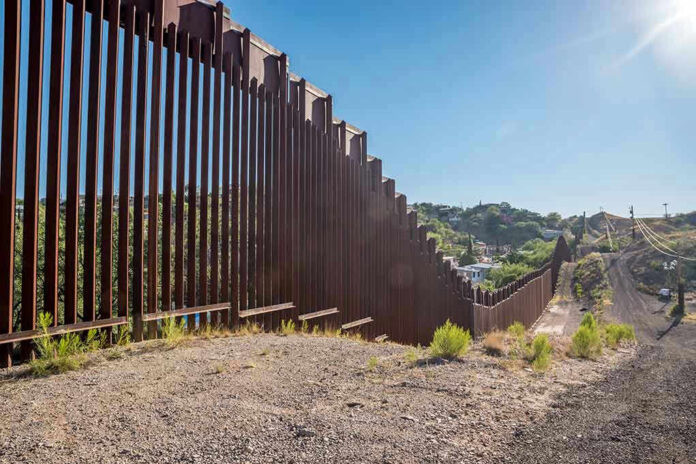
President Trump’s border wall project has finally reached Laredo, Texas, sparking fierce resistance from local officials who are mobilizing legal challenges against federal overreach in one of America’s safest border cities.
Story Highlights
- DHS unveils “smart wall” plan for Laredo despite city’s stellar safety record without barriers
- Local officials prepare legal battle over eminent domain and environmental concerns
- Laredo serves as major trade hub with billions in cross-border commerce at stake
- Construction contracts worth $4.5 billion already awarded for broader Texas wall project
Trump Administration Revives Border Security Promise
The Department of Homeland Security has finalized plans for a technologically advanced border wall through Laredo, Texas, fulfilling President Trump’s commitment to secure America’s southern border. The “smart wall” design integrates steel barriers with cutting-edge surveillance and detection technology, representing a significant upgrade from traditional fencing approaches. DHS officials updated Laredo leadership on the comprehensive security footprint in early 2025, marking the city’s inclusion in the broader border fortification strategy.
Texas has already completed 66.4 miles of border wall construction as of June 2025, with active projects underway in Webb County where Laredo is located. The Texas Facilities Commission has overseen state-funded construction while coordinating with federal agencies on the comprehensive border security initiative. No specific construction contracts for Laredo have been awarded yet, though $4.5 billion in contracts have been issued for the broader statewide project.
Local Opposition Challenges Federal Authority
Mayor Victor D. Treviño warned residents that the wall “will change our community forever,” highlighting concerns about the project’s impact on Laredo’s character and economy. City officials are reviewing federal blueprints while gathering evidence for potential legal challenges, particularly regarding eminent domain issues and environmental protection of the Rio Grande. The Laredo City Council has scheduled public hearings and resident polling to document community sentiment against the federal mandate.
Congressman Henry Cuellar strongly opposes the wall construction, emphasizing Laredo’s exceptional safety record without physical barriers. He noted that “Laredo has been named the safest city in the state of Texas, and that’s without a single foot of new border wall.” This resistance reflects broader concerns about federal overreach in communities that have successfully maintained security through existing methods and local law enforcement cooperation.
Economic and Environmental Stakes Rise
Laredo’s position as a major commercial gateway facilitating billions in international trade creates unique challenges for wall construction. The city’s economy depends heavily on cross-border movement and commerce, with international bridges serving as vital economic arteries between the United States and Mexico. Local business owners and trade advocates worry the physical barriers could disrupt established commercial relationships and cultural ties that have contributed to regional prosperity.
Environmental concerns focus on potential risks to the Rio Grande, which serves as Laredo’s sole water source and supports the regional ecosystem. City officials are documenting potential environmental impacts as part of their legal preparation, recognizing that federal construction could permanently alter the riverfront landscape. These concerns reflect legitimate worries about protecting natural resources that sustain the local community and support economic development.
Sources:
Laredo Federal DHS Border Wall – Spartnerships
Border Watch: Federal Smart Wall Plans for Laredo – Fox Chattanooga
Texas Border Wall Construction Status – Texas Facilities Commission
Laredo Border Wall Framework Legal Issues – Laredo Morning Times