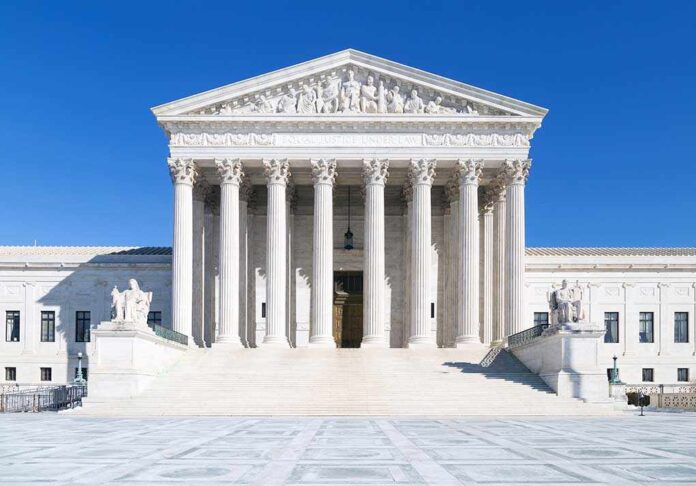
In a move that could shake the very foundation of Second Amendment rights, the Supreme Court is set to decide whether the federal government can continue banning gun ownership by Americans who have ever used marijuana or other illegal drugs—sparking intense concern among defenders of constitutional liberties.
Story Snapshot
- The Supreme Court will hear a case challenging a federal law barring gun ownership for unlawful drug users, including marijuana users.
- Lower courts have split on whether the ban is too broad, with some finding it unconstitutional unless someone is actively under the influence.
- The decision could redefine how the Second Amendment applies to millions of Americans and impact ongoing prosecutions.
- The outcome will set a crucial precedent for government power over individual rights, especially for law-abiding gun owners.
Supreme Court to Decide If Government Can Ban Gun Rights Over Drug Use
The Supreme Court has agreed to review a major challenge to the longstanding federal ban that prohibits anyone considered an “unlawful user” of controlled substances—such as marijuana or other illegal drugs—from owning firearms. This law, part of the Gun Control Act of 1968, has been enforced for decades, but recent lower court rulings argue that it sweeps too broadly and unfairly targets Americans who may have used drugs in the past but pose no real threat. The upcoming decision will clarify whether the government can continue to infringe upon the Second Amendment rights of millions who may have experimented with drugs, regardless of their current behavior or threat level.
At the center of this landmark case is Ali Danial Hemani, a U.S. citizen charged with violating federal law due to his marijuana use. Hemani argues that his prior drug use should not strip him of his constitutional right to own a firearm. On the other side, the Department of Justice insists that such restrictions are necessary to prevent potentially dangerous encounters with impaired individuals. The Supreme Court’s willingness to hear the case follows conflicting decisions from the 5th and 8th Circuit Courts, which have ruled that the blanket ban violates the Constitution unless someone is under the influence at the time of gun possession. This split among lower courts has forced the nation’s highest court to intervene and provide much-needed clarity.
Background: Decades-Old Law Faces Modern Scrutiny
The federal statute in question originated in 1968, a period marked by heightened concern over public safety and social unrest. Lawmakers at the time included provisions that barred not only felons and the mentally ill but also unlawful drug users from possessing firearms. However, the 2022 Supreme Court decision mandating that gun restrictions must have clear roots in historical tradition has emboldened challenges to laws that appear overly broad or disconnected from the founders’ intent. As more states legalize marijuana and public attitudes shift, critics argue that the federal ban now ensnares responsible citizens and infringes on rights without real justification. The Supreme Court’s ruling will have far-reaching consequences for both gun owners and the broader debate over federal power and individual liberty.
Hunter Biden’s highly publicized conviction and subsequent pardon for violating this very law has illustrated the personal and political stakes at play. His case brought national attention to the inconsistency and controversy surrounding the enforcement of gun laws against drug users. The new case before the Court could set a permanent precedent, affecting not only high-profile defendants but also average Americans who may have used marijuana legally under state law but remain vulnerable to federal prosecution.
Potential Impacts for Gun Owners and Constitutional Rights
The Supreme Court’s decision—expected after oral arguments in January—will shape how gun laws are enforced across the nation. In the short term, ongoing prosecutions under the federal ban may be affected, and states could be compelled to revisit their own policies. Over the long term, the ruling could fundamentally alter the relationship between the government and the people by either reaffirming or reining in federal authority to restrict constitutional rights based on personal conduct unrelated to current danger or criminal behavior. For many conservatives, this case represents a test of the government’s respect for the plain meaning of the Second Amendment and the importance of individual responsibility over sweeping, one-size-fits-all bans.
The debate has energized gun rights advocates who see the broad federal ban as government overreach—an erosion of basic freedoms that runs contrary to American tradition. Legal scholars and experts highlight the need for any restriction to be firmly grounded in historical precedent, not modern political preferences. At the same time, public safety advocates argue that removing these restrictions could increase the risk of gun violence. The Supreme Court’s ruling will likely become a major touchstone in future debates about the limits of government power and the enduring strength of constitutional protections.
Broader Political and Social Consequences
This case lands at a time when Americans are already deeply divided over gun rights, government authority, and personal freedom. The ruling could have significant economic, social, and political impacts—from shaping the legal firearms market to influencing how law enforcement agencies handle similar cases. Politically, the decision is expected to fuel ongoing debates about gun control, the war on drugs, and the future of individual liberty in the United States. Whatever the outcome, it will send a powerful message about how far the government can go in limiting constitutional rights in the name of public safety.
Sources:
Supreme Court will decide on guns rights for drug users – Los Angeles Times
Supreme Court to decide if drug users can own guns, Trump DOJ argues in Supreme Court – AZ Central