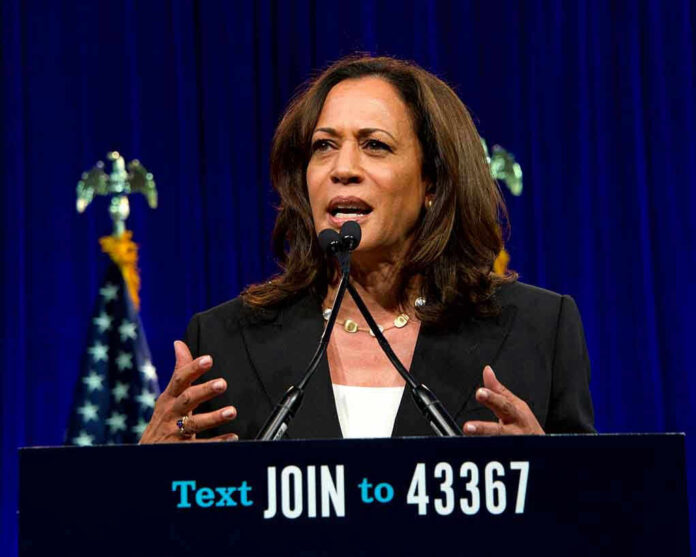
Kamala Harris’s public defense during her book tour, blaming her lack of presidential authority for Gaza policy controversies, exposes deep fractures in the Democratic Party and raises questions about leadership accountability after years of failed leftist policies.
Story Snapshot
- Pro-Gaza protesters disrupted Harris’s New York book event, calling her complicit in the Israel-Hamas war.
- Harris distanced herself from Biden policies, citing her limited power as vice president.
- Event highlights growing divisions and activist unrest on Democratic foreign policy.
- Security concerns and public confrontations mark political events as flashpoints for dissent.
Public Confrontation Reveals Democratic Divisions on Gaza
On September 24, 2025, Kamala Harris launched her memoir “107 Days” at Manhattan’s Town Hall, a venue known for hosting political events with strong activist presence. The opening event was interrupted by at least three pro-Palestine protesters, who accused Harris of complicity in the ongoing Israel-Hamas war. Security promptly removed the hecklers, but their actions underscored the persistent tension and division within the Democratic Party regarding U.S. policy toward Gaza and Israel.
Harris responded to the accusations by defending her prior calls for a Gaza cease-fire and emphasizing her lack of direct authority during her vice presidency. Her statement, “I’m not president right now,” was aimed at clarifying her limited power to change foreign policy, but also drew criticism from activists who believe more should have been done to influence the Biden administration’s approach to the conflict. This exchange highlighted the Democratic leadership’s struggle to balance party unity with growing progressive demands for humanitarian intervention.
Leadership Accountability and Erosion of Public Trust
Harris’s explicit distancing from President Biden’s Gaza policy reflects a broader challenge facing Democratic leaders: maintaining credibility amidst internal dissent and public scrutiny. The persistent protests and confrontations at high-profile events like book tours have become increasingly common, signaling a shift in how activists hold politicians accountable. For many Americans, especially those frustrated with past leftist policies that promoted government overreach and fiscal mismanagement, these episodes reinforce concerns about leadership accountability and the erosion of constitutional values.
The event’s timing, following Harris’s March 2024 call for a temporary Gaza cease-fire in Selma, Alabama, shows her attempt to shape a distinct narrative apart from Biden’s administration. However, critics argue that such statements do little to address the underlying issues of policy and leadership, and instead highlight a lack of decisive action when it mattered most. The public spectacle at Harris’s book event has amplified the debate over the Democratic Party’s direction and its ability to respond effectively to global crises and domestic unrest.
Security Measures and Political Protest Flashpoints
Increased police presence outside the Manhattan venue was a direct response to anticipated protests, reflecting the heightened security concerns now associated with political events. Organizers and law enforcement faced the challenge of ensuring both safety and the right to free expression, as activists sought to leverage the public platform to voice dissent. The removal of protesters from the event underscores the difficulty politicians face in managing public backlash while promoting their agendas. These incidents serve as a barometer of shifting public opinion and the growing willingness of citizens to confront political leaders over contentious issues.
‘I’m Not President Right Now’: Pro-Gaza Hecklers Derail Kamala Harris Book Tour https://t.co/jlQnFF1OJ6
— JaneDoe (@JaneOpines) September 26, 2025
Book tours and similar public appearances are increasingly becoming battlegrounds for political activism, with leaders like Harris forced to address uncomfortable questions about their roles in shaping policy. The confrontations not only disrupt the intended narrative but also force politicians to publicly defend their records. As political events become flashpoints for protest, the pressure on leaders to genuinely address the concerns of voters who value constitutional protections, limited government, and traditional American principles continues to mount.
Long-Term Implications for Democratic Unity and Political Strategy
The fallout from Harris’s disrupted book event illustrates the short-term impact of heightened media scrutiny and activist pressure on Democratic leaders. In the long term, these divisions threaten the unity of the party and may influence the strategy adopted for future elections and foreign policy decisions. As Harris continues her book tour under the watchful eye of protesters and critics, the ability of Democratic politicians to maintain credibility and effectively address internal dissent will be critical to their prospects. For conservative Americans, these episodes highlight the need for strong leadership rooted in the protection of constitutional values and national interests.
Sources:
Kamala Harris confronted by protesters at New York book event