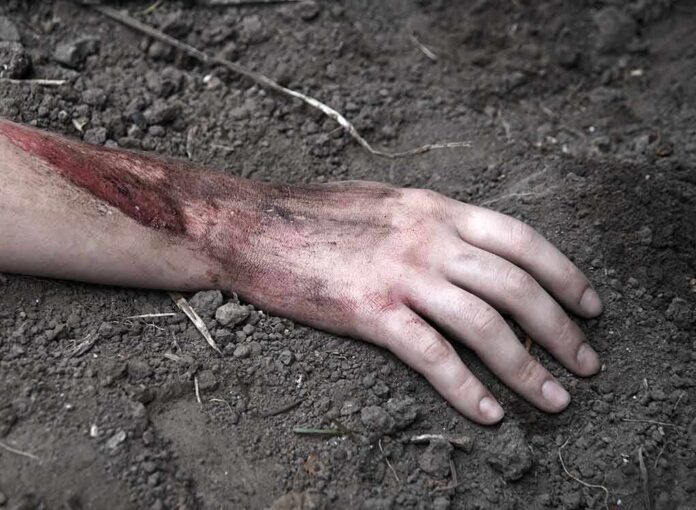
Forty-two people, including women and children as young as two years old, were massacred in central Nigeria in what local officials describe as a “pathetic situation” that underscores the deadly conflict between Muslim Fulani herders and Christian farmers.
Key Takeaways
- Forty-two people were killed in weekend attacks across four communities in Benue state, central Nigeria, with victims including women and young children.
- The violence represents an escalation in the ongoing conflict between nomadic Fulani herders and indigenous Christian farmers, which has claimed at least 2,347 lives in 359 incidents between 2020 and 2024.
- Despite a 2017 law banning open grazing in Benue state, weak enforcement has failed to protect vulnerable farming communities from continued attacks.
- Climate change, resource scarcity, and religious divisions (Muslim herders vs. Christian farmers) intensify the conflict in Nigeria’s agricultural heartland.
- A Catholic priest was shot during the attacks and remains in critical but stable condition, highlighting the religious undertones of the violence.
Deadly Weekend of Violence Across Multiple Communities
The attacks, attributed to Fulani herders, occurred over a weekend of violence that devastated four communities in Benue state. On Saturday, attackers killed 10 people in the villages of Tyolaha and Tse-Ubiam. The bloodshed intensified on Sunday when 32 more people were murdered in Ahume and Aondona communities. The coordination and brutality of these attacks suggest an organized campaign against farming communities in Nigeria’s agricultural heartland, rather than random violence or isolated incidents of criminal activity.
“It’s a pathetic situation. As we speak, we are still recovering corpses,” said Victor Omnin, chair of the Gwer West local government area.
Local officials confirmed that a Catholic priest was shot during the attacks and remains hospitalized in critical but stable condition. The targeting of religious figures adds another disturbing dimension to this conflict, which already contains strong religious undertones with predominantly Muslim herders attacking largely Christian farming communities. This religious division further complicates efforts to find peaceful solutions to the resource competition driving these conflicts.
Climate Change and Resource Competition Fuel Deadly Clashes
The violence in Benue state represents more than isolated criminal incidents. It is part of a complex and escalating conflict between nomadic Fulani herders and indigenous farming communities across central and northwestern Nigeria. This decades-old tension has intensified in recent years due to climate change, which has pushed herders farther south in search of viable grazing land. As droughts become more severe in northern regions, herders increasingly encroach on farmland, triggering violent confrontations with farmers who see their livelihoods threatened.
“The relentless violence must end. Our farmers are the backbone of our economy, yet they live in constant fear,” said Asema Achado.
Benue state, known as the “Food Basket of the Nation,” has seen its agricultural productivity severely hampered by these ongoing attacks. Farmers are afraid to work their fields, leading to reduced crop yields and threatening food security throughout Nigeria. The economic impact extends beyond the immediate communities, affecting food prices and availability throughout the country. These attacks are not just a local problem but a national security and economic crisis.
Failed Government Response and Rising Vigilantism
Despite passing a law in 2017 that banned open grazing in Benue state, government authorities have failed to implement effective enforcement mechanisms. This regulatory failure leaves vulnerable farming communities exposed to continued attacks. Without consistent law enforcement and military protection, many communities have turned to vigilante groups for protection, further escalating the cycle of violence. The formation of these self-defense groups, while understandable, risks transforming localized conflicts into wider ethnic and religious violence.
The official death toll from this conflict – at least 2,347 casualties in 359 incidents between 2020 and 2024 – likely understates the true human cost. Many attacks in remote areas go unreported, and government figures often fail to capture the full extent of the violence. Allegations of land-grabbing and ethnic cleansing further complicate this crisis, with some farmer communities claiming that herder attacks are part of a coordinated campaign to displace them permanently from their ancestral lands.
Growing Humanitarian Crisis Demands Immediate Action
The continued violence has created a growing humanitarian crisis in central Nigeria. Thousands of people have been displaced from their homes, fleeing attacks and seeking safety in overcrowded refugee camps with inadequate facilities. Children are missing educational opportunities, healthcare systems are overwhelmed, and the psychological trauma inflicted on survivors will have lasting impacts for generations. Without decisive government intervention, including proper implementation of grazing restrictions and meaningful security guarantees for farming communities, this cycle of violence will continue to claim innocent lives.